
5 Popular Birthing Positions for Reduced Pain and Length
Choosing the best birthing positions can 1) decrease pain, 2) encourage baby to rotate, and 2) help mom to dilate = therefore allowing for a less painful and shorter labor.
Who doesn't want less pain? Don't we all want shorter labors? Let's get started!
On This Page
10 Minute Read
↓The Goals of Labor
↓Benefits of Labor Positions
↓Get Support
↓5 Popular Birthing Positions
↓Standing, Rocking, and Leaning
↓Sitting and Rocking
↓Hands and Knees
↓Sitting on the Toilet
↓Side-Lying
↓FREE Printable Labor Positions Resource
The Goals of Labor
The first stage of labor has two main goals.
- The first goal of labor is for the mother to have powerful, uterine contractions that open the cervix to 10 cm.
- The second goal of labor is for the baby to rotate to the best possible position for an easy descent through the mother's pelvis.
The most ideal position for a baby to be in is head down, but also facing its mother's back. This is called occiput anterior.
If a baby is not in this position, labor will sometimes drag out since the work of each contraction is focused on rotating the baby into the best position. (OR baby will come through in the less than ideal position, which can work, but will likely just take a bit longer. Ever heard of a sunny side up baby?)
Once labor has encouraged an optimal fetal rotation, labor will continue to progress. By using birthing positions that encourage an optimal fetal position, less time will be spent on "spinning" the baby and more on dilation and descent.
TIP: For information about things to do during pregnancy to encourage optimal fetal positioning and body balancing you MUST check out Spinning Babies' Daily Essentials DVD.
Benefits of Labor Positions
One of the most important things a mama can do during labor and birth is to be upright and moving throughout her experience. (The only exception to this is in early labor or pre-labor because this is when she needs to take advantage of opportunities to rest and sleep.)
Reduce Pain
Women instinctually choose active labor positions because they help reduce pain. They quickly learn what positions feel better than others.
Gravity
But wait, there's more! Active and upright labor positions benefit from the pull of gravity to bring baby down. If you think about it, when a woman is upright and moving compared to lying down, she uses gravity to bring her baby down and through the pelvis.
Pelvic Movement
On top of that, each time her pelvis rocks and shifts, she is helping her baby make those twists and turns needed to make the downward decent. Different positions create space in the pelvis, which allows baby to rotate into the best possible position for labor.
Being active in labor is helpful for coping with pain, but it will also encourage a quick(er) labor. Especially during transition!
Get Support
A lot of birthing positions require a support person - maybe a doula or the woman's partner. Also, having one or both of these people close by and physically supporting a woman through each position can evoke feelings of comfort, safety and relief. These feelings can lessen the feelings of fear, which in turn lessens the pain a woman may feel.
5 Popular Birthing Positions for Reduced Pain and Length
When a woman instinctually changes birthing positions throughout labor she will likely choose positions that encourage labor progress but that also decrease her pain.
The following are 5 popular birthing positions for reduced pain and length.
NOTE: EveryBODY and every birth are different. Just like you, your birth will be unique! There is no one "right way" to give birth. As I say in my childbirth classes, whatever you have to do to get your baby out - do it! That being said, the following birthing positions, on average, aid for a less painful and shorter birth. However, you may find something else that works better for you. If so, do it! You are awesome and an amazing birth warrior!
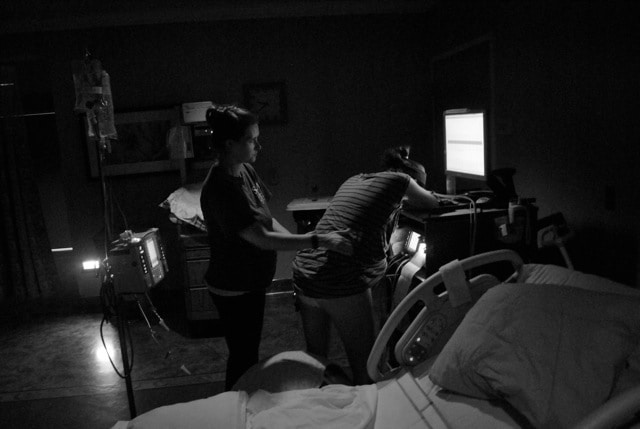
Standing, Rocking and Leaning
First on the list of the best birthing positions for a less painful and faster birthing is standing, rocking and leaning.
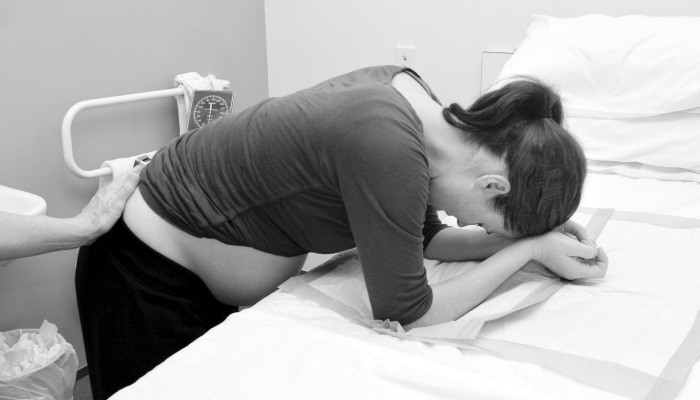
- Standing is helpful because it uses gravity to aid in the descent of the baby.
- Leaning is helpful because it gives mom's upper body a break while at the same time experiencing the benefits of gravity.
- Leaning on a bed, wall, birth ball or furniture is helpful, but some mothers really find pain relief by leaning on a support person. Personal connection with a doula, friend, or family member can make such a difference.
- While standing and leaning, rocking or swaying back and forth can be really helpful because it moves the pelvis, which encourages the rotation of the baby into the best position and at the same time relieves pain.
- Standing and leaning allows for back massage and/or counter pressure (double hip squeeze or sacral pressure) which is especially helpful when a woman experiences back labor.
Sitting and Rocking on a Birthing Ball
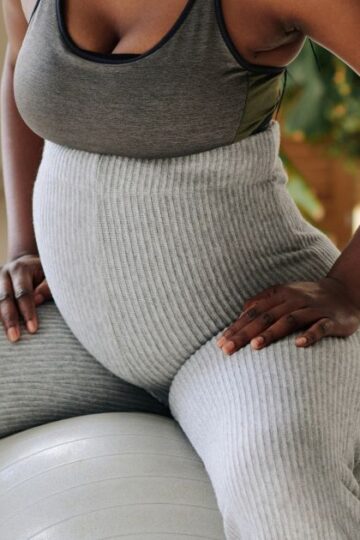
Next on the list of the best birthing positions for a less painful and faster birthing is sitting and rocking on a birthing ball.
TIP: A birth ball isn't anything fancy, it's just a regular exercise ball you would find at the gym. When buying a birthing ball, please make sure you buy the right size. Your hips need to be higher than your knees. (see photo below)
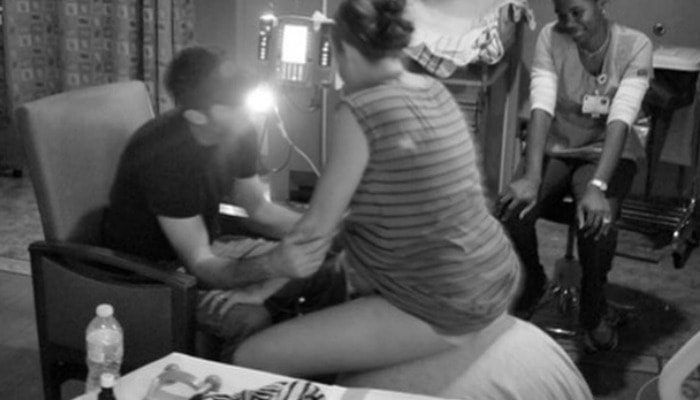
- Sitting, compared with standing, gives a woman's legs a rest but still takes advantage of an upright position, which encourages labor progress through gravity and an open pelvis.
- Rocking, while sitting on a birthing ball is helpful because it encourages fetal rotation and descent - which helps labor to progress.
- Also, the rhythm that comes from rocking on a ball can in itself be helpful with pain management.
- Another benefit of the birthing ball is that it provides mild pelvic counter pressure. For some women this is a relief, for some it's the opposite. Whatever is helpful, do it!
Hands and Knees or Kneeling
The third position on the list of the best birthing positions for a less painful and faster birthing is hands and knees or kneeling.
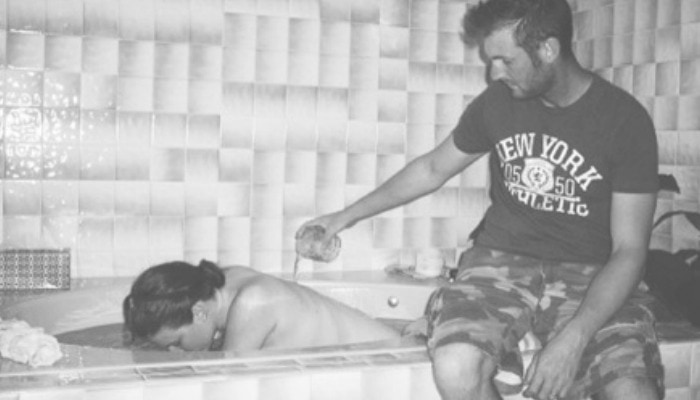
- Hands and knees or kneeling is helpful because it allows the legs to rest a little more than if the mother were standing.
- In the hands and knees position the pelvis is open even while the mother is semi-resting.
- This position may provide relief from back pain caused from back labor. In fact, this position may even resolve the underlying cause of back labor.
- A woman may enjoy kneeling while in a tub of water, as the water helps hold her body weight. TIP: Place soft washcloths or hand towels underneath the knees while in the tub. This will help prevent the knees from becoming sore.
- Another way to kneel is with a birthing ball. Instead of leaning into the back of a bed, stack of pillows, a person, etc., lean on the ball and let the belly hang.
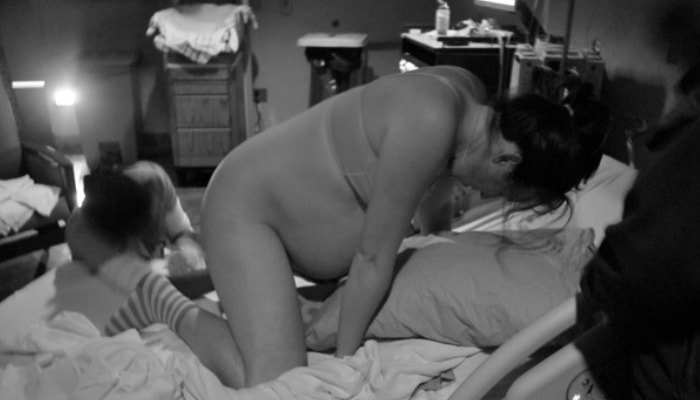
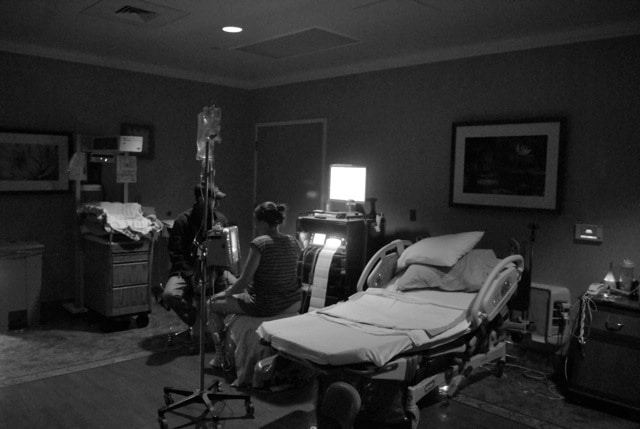
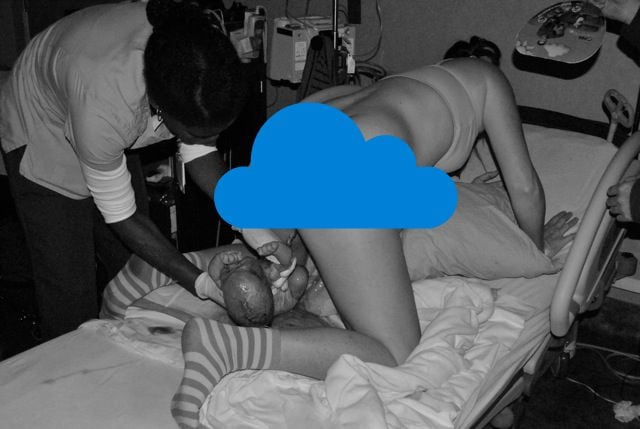
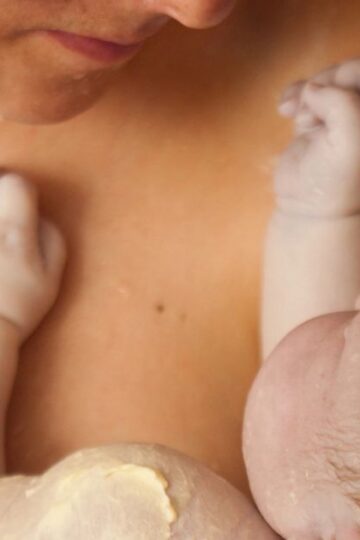
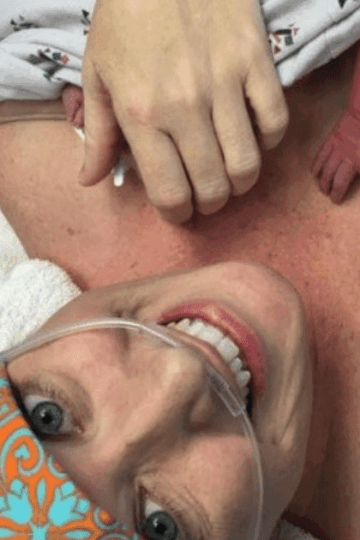
Kneeling or the hands and knees is a great position to give birth in especially in the hospital! (To read about Mercy's birth in the hospital (see the pictures above and below) head on over here!)
Sitting on the Toilet
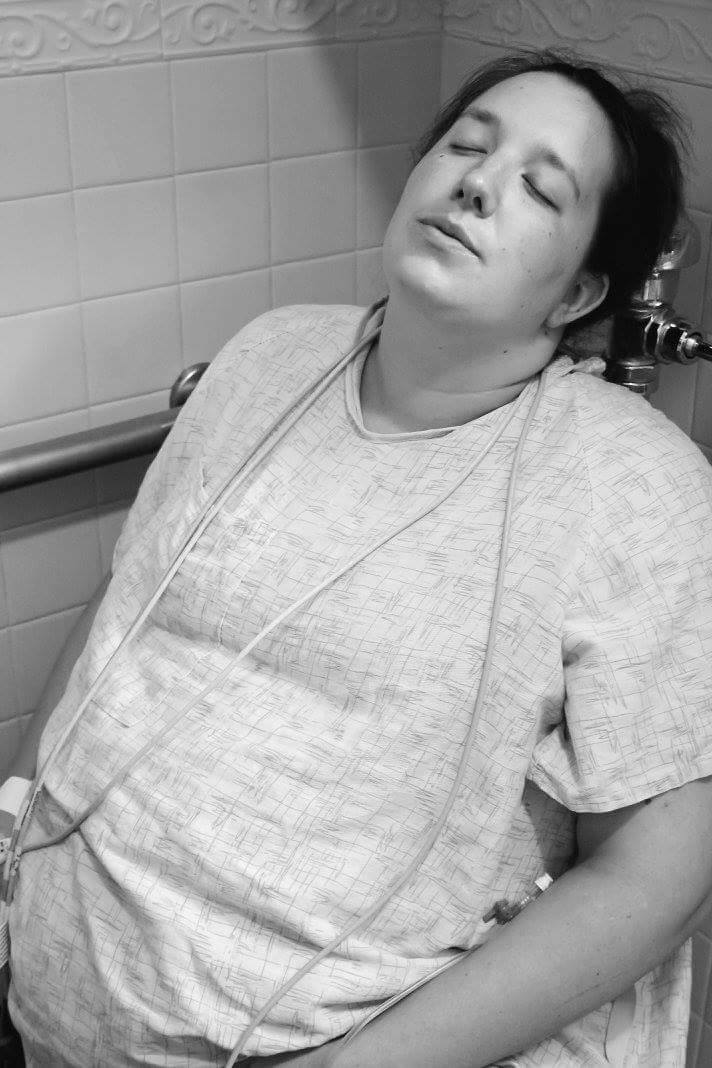
The next birthing position for a less painful and faster birthing is the toilet. The toilet is a fan fav for labor so much so that the bathroom is sometimes referred to the birthing cave, or the toilet the relaxation station. LOL!
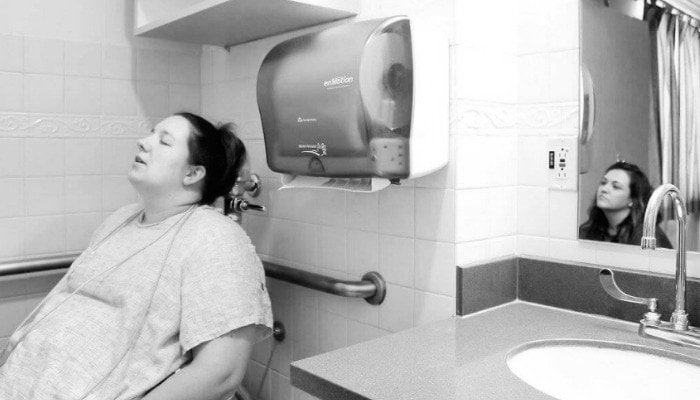
(Thanks, LF for the photos! You were a rockstar!)
- The toilet is a great place to labor because it is a place of solitude. For a moment of peace, or to get off the monitors for a minute, many women head to the bathroom.
- Also, sitting on the toilet is where we have been trained to "let go" at an early age. It makes sense that even in labor, we allow our bodies to "let go" there too. It's not uncommon for women's labors to accelerate rapidly while in the bathroom!
- Because women need to drink at least 8 ounces every hour, it can be more convenient to just stay in the bathroom. When it comes time to pee, there's nowhere to go!
- Also, the toilet is one of the best laboring positions because it is an upright position which takes advantage of gravity, but it also encourages rest. Facing the back of the toilet can be helpful too (if at home) to rest the top half of the body. Simply place a pillow on the back of the toilet and take a tiny nap!
Side-Lying
Finally, another one of the most popular birthing positions is the side-lying position.
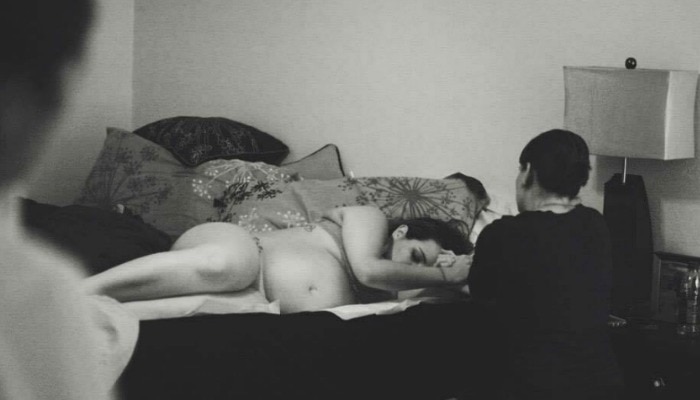
(Thanks HF for the photo, you were a birthing warrior!)
- Many people hope to labor in the side-lying position, especially if they've taken a Bradley Method childbirth class. Much of the pain coping techniques taught in this class revolve around total body relaxation in a side-lying position.
- This position can be very helpful, especially in a long labor, or towards the end when the mother is exhausted.
- The side-lying position allows for rest, but doesn't compromise the pelvis because it keeps it open, compared with lying flat on the back.
- Another great thing about a side-lying position is that makes using a peanut ball a no-brainer. Simply place a peanut ball between the legs, which will open things up really well. According to a friend of mine, "the peanut ball gets shit done". A peanut ball helps labor to progress very quickly!
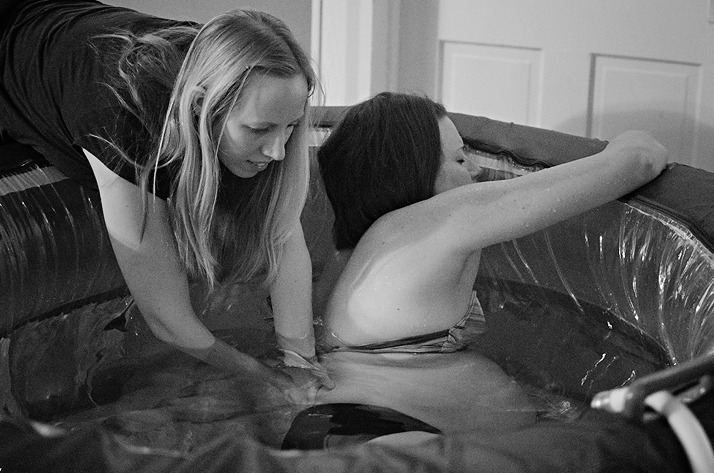
- Side-lying doesn't only have to be in bed - many women do it in the tub too.
FREE Printable Labor Positions Resource
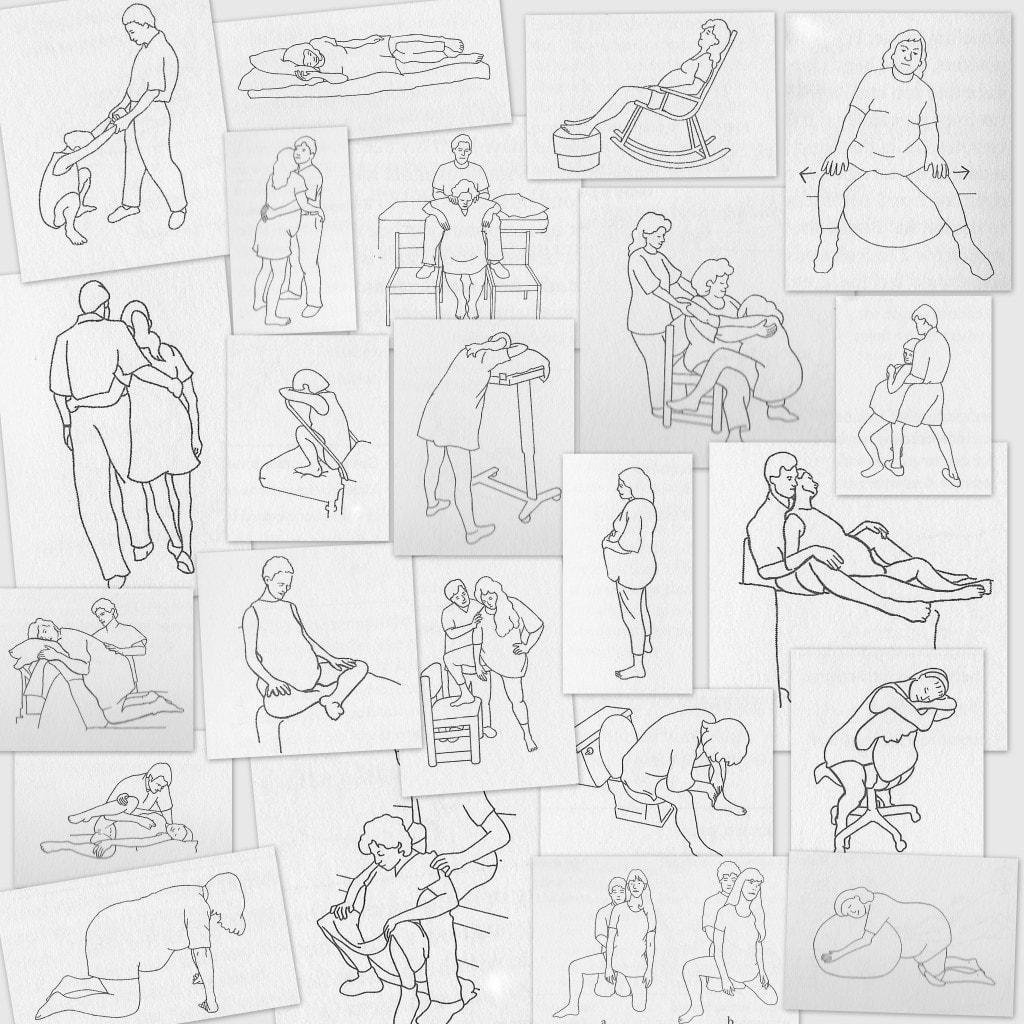
Below is a photo of birth positions from a wonderful free resource that I give to couples in my childbirth classes. I love it because it shows some of the many options and possibilities in labor all in one place. If you'd like the free resource, go ahead an click the following link for a pdf. Comfort in Labor - by Penny Simkin.
ADDITIONAL RESOURCES
These images also came from Penny Simkin's book The Birth Partner. I highly recommend it for anybody hoping to support a mama throughout labor.
Penny Simkin's popular book The Birth Partner is an excellent read for pregnancy but also to use during labor. There are many illustrations of various birthing positions. I often bring it to my childbirth classes I like it so much! It's also an excellent book for book for dads wishing to be a very "hands on" birth partner.

5 Popular Birthing Positions for Reduced Pain and Length
Choose the most popular birthing positions to encourage dilation and an optimal fetal position therefore allowing for a shorter and less painful labor. Just to recap, these are the top five birthing positions for a natural birth.
- Standing, Rocking and Leaning
- Sitting and Rocking on a Birthing Ball
- Hands and Knees or Kneeling
- Sitting on the Toilet
- Side-Lying
Side lying is optimal for mons who have had pelvic girdle injuries. Symphasis pubis dysfunction is one where mom really needs to avoid being on her back, as it can cause additional injury. I've birthed 2 of min side lying and they were even faster exits than the 3 previous babies.
Moms* not mons.
This is a really good article. I will probably try all of these. I have went through one natural labor but I’m still nervous for this one. Haha. Thank you so much!!
You're welcome!
Thank you for the information. I have had 3 natural births in the hospital and am choosing to have my 4th in a birthing center. Needless to say, a little different. I feel like it's my first all over. All I have ever known is on my back in the hospital bed until it's time to push. So this gives me the confidence to be more present during my labor. Writing it down on a cheat sheet for my husband in case he needs a refresher during 🙂
You're welcome!