
How to Prevent Tearing During Birth
Women that take my childbirth classes want to know how to prevent tearing during birth, just as much as they want to know how to have a natural childbirth. It's a very important topic that's unfortunately riddled with misinformation.
A doctor once told me that the average first time mom will get a second degree tear during childbirth. Basically, he believes most women tear significantly from childbirth. The underlying assumption is that a woman's perineum is not made to withstand the stress of childbirth.
I call bullshit.
If that were true, then all women, no matter where, when, or how they give birth, would have second degree tears as well. However, this is simply not the case. Many women that give birth in and out of the hospital are able to prevent or reduce tearing by following simple guidelines, many of which are discussed in this post.
The thing is, obstetricians are surgeons and are therefore very comfortable suturing a woman's perineum after birth. Suturing is their jam! Because of this, I think they are less inclined to learn how to prevent tearing during birth, because at the end of the day, they can just sew a woman back together.
However, a postpartum recovery with minimal tearing and suturing is much more pleasant for a woman than if she's stitched to high heavens. It is a worthwhile endeavor to learn how to prevent tearing during birth.
How to Prevent Tearing During Birth
Whether you're planning for a natural birth or a medicated birth, in or out of the hospital, the following are 5 surprising ways to prevent tearing that will change the way you give birth.
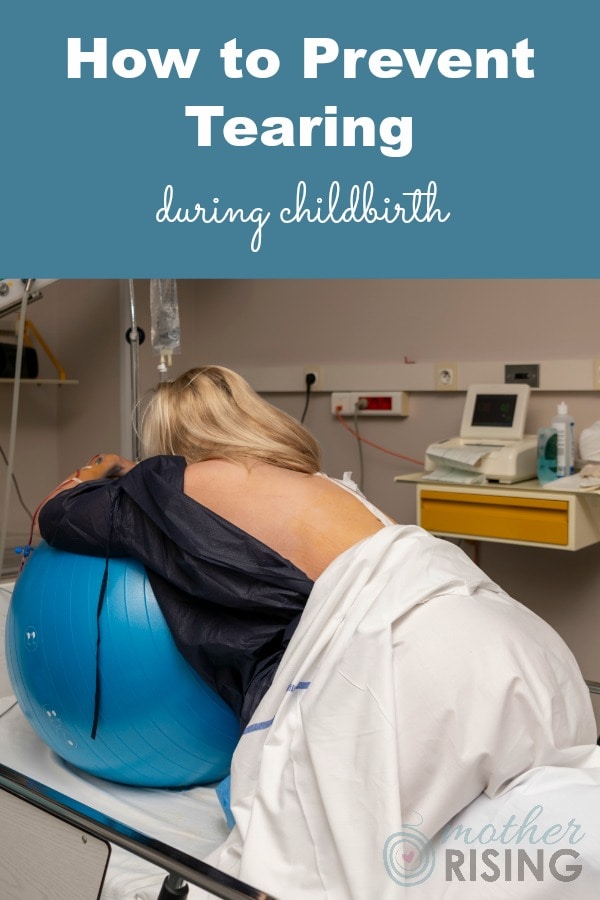
1. Choose Birthing Positions Wisely
Squatting Increases Tearing
The first thing we need to talk about is squatting. When in the squatting position, compared to being flat on the back, a woman's pelvis opens 20-30% larger than it would otherwise. A greater outlet equals an easier birth. Isn't that amazing?!
In conclusion, us Americans should squat and push our babies out just like the women in below video, right? Eh, maybe not.
You see, according to this study (and many of the midwives I know), pushing in the squatting position greatly increases the chance of tearing. Squatting, using birth stools, or even squatting with a squat bar, all lead to an increase in tearing.
In a nut shell, if you are a typical sedentary woman, you probably should re-think squatting during pushing. However, if you're like the 1970s Southern Brazilian Indian women in the above video who squats to rest, your body may be able to handle squatting during pushing.
If you're up to the challenge, visit Katy Bowman and teach your body to squat.
Side-Lying, Kneeling, Hands and Knees Decreases Tearing
The semi-reclined lithotomy position is what most women use when pushing at hospital births. Despite the convenience this position offers care providers, it's one of the more common mistakes that don't actually prevent tearing.
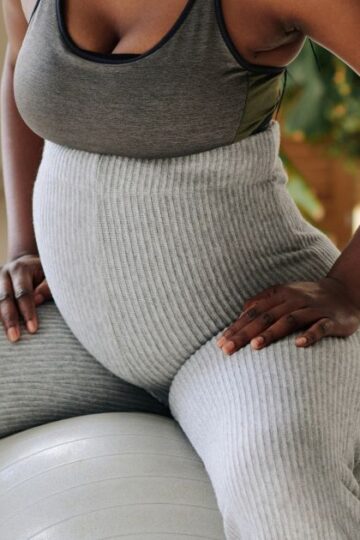
On the other hand, positions associated with a reduced risk of perineal damage are lateral positions like kneeling or a hands and knees position.
Midwife Thinking says,"I have noticed that when women are left to birth instinctively, they will often move from a squatting position – if they got into one – into a hands-knees position just before the head crowns."
(That's exactly what I did for my births. At some point in all my labors I squatted, but Gabriel was born in the side-lying position, Eden was born in the kneeling position and Mercy was hands and knees.)
If you really want to squat in labor, go for it, maybe just move to hands and knees just before crowning.
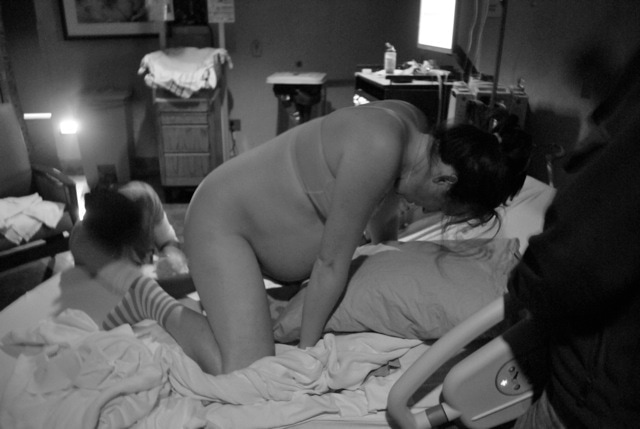
2. During Waterbirth, Continue to Support the Perineum
Unfortunately, it seems that waterbirth, although safe for mom and baby, has an association with tearing. I talked with my midwife, and she agreed with this. She definitely sees tearing with waterbirths.
Maybe this phenomenon happens because care providers are more hands off when a woman is in the water. Or maybe it's because care providers aren't pursuing gentle birth in any venue - land or water. Either way, I have some solutions.
Even when in the water, women should continue to use the information discussed in this article. The same techniques to prevent tearing on land can be used use in water.
- Choose lateral positions like kneeling or hands and knees.
- Provide firm support to the perineum with warm compresses.
- As much as possible, relax.
- After the head is born, wait.
When I gave birth in water I did tear, but it didn't require stitches. A waterbirth isn't necessarily a death sentence to your perineum, but it's definitely something to take into consideration to prevent tearing during birth.
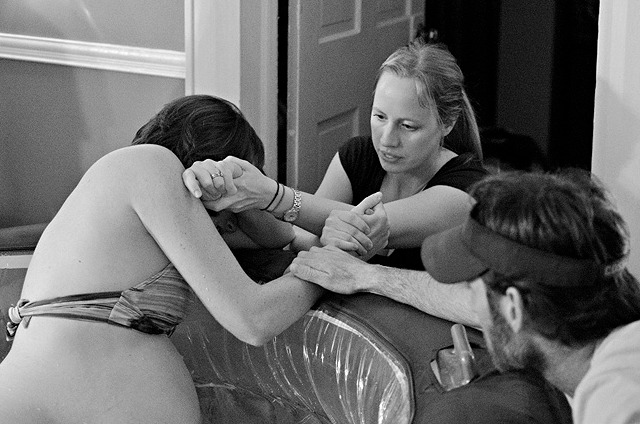
3. Rethink Perineal Massage
Perineal Massage During Pregnancy
Many women wonder if perineal massage during pregnancy can reduce tearing at birth. Perineal massage is when two lubricated fingers are placed in the vagina, and pushed down and to the sides to "pre-stretch" the skin prior to birth.
The evidence says that perineal massage during pregnancy will help a first time mom decrease the chance of an episiotomy. However, in my experience a woman is more or less likely to receive an episiotomy depending on who her care provider is.
If you are a first time mom and are at risk of an episiotomy, perineal massage during pregnancy may help. Hope on over to this post for more information and instructions on how to do perineal massage at home. And remember, it's not really a massage. 😉
Perineal Massage During Pushing
When parents hear the term perineal massage they typically imagine something that’s done during pregnancy. However, many care providers provide perineal massage during the pushing stage of labor to help reduce tearing.
- While mom is pushing, her care provider will sit at the bottom of the hospital bed or stool, gowned up with gloves on.
- Next, they place their outstretched hand towards the nurse, who squirts lubricating jelly on their two fingers.
- After that they take their two fingers and place them in the vagina and push down and to the sides. On a clock, picture 3 o’clock to 6 o’clock, 6 o’clock to 9 o’clock, and then 9 o’clock to 6 o’clock.
- Rinse and repeat.
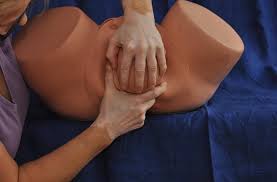
Watching this looks incredibly uncomfortable, almost painful. And if not painful, then by golly it’s gotta be totally distracting! Sometimes these moms get 30 to 60 minutes of this! The vulva becomes swollen, and leaves me feeling frustrated, mad, and sad.
And what really makes me frustrated is that nurses do this technique too when baby is crowning (before they call the doctor in). Nurses learn from doctors, assuming it’s an evidence based practice.
This hands on approach to supporting a perineum is one of the biggest pet peeves I have about hospital births.
Does Perineal Massage During Pushing Work?
My feelings and anecdotes aside, however, the research does not support the practice of perineal massage during pushing.
“Perineal massage in the second stage of labour did not have any effect on the likelihood of an intact perineum, perineal trauma, pain, or subsequent sexual, urinary or faecal outcomes, but was not harmful.” (SOURCE)
Use Warm Compresses to Prevent Tearing
So far what we've learned is that squatting and lying on our backs increases tearing, but a side-lying, kneeling, or hands and knees position decreases tearing. We've also learned that perineal massage is mostly worthless. So what else can we do to prevent tearing during birth?
Warm compresses have been shown to help decrease the incidence of tearing, which is wonderful news because using warm compresses is so simple.
How to use Warm Compresses at Birth
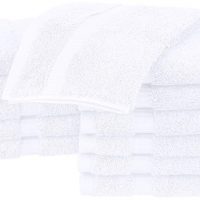
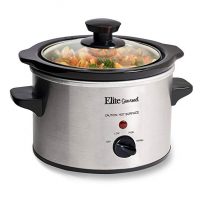
Supplies Needed: All you need is very warm water and washcloths. Here's an inexpensive 24 pack of washcloths. A crockpot can help keep the water warm. Here's an inexpensive 3 quart one that's only $16.
Instructions: Take the washcloth, submerse it in the very warm water, wring it out, and then place it on the perineum with firm support while baby is crowning.
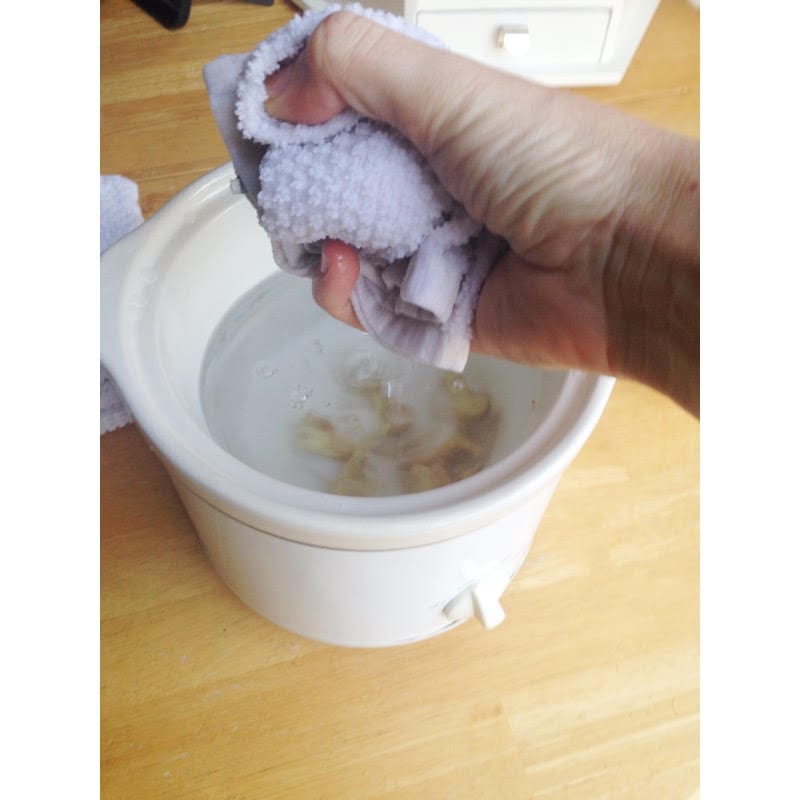
Warm Compresses at a Hospital Birth
I've seen this done in the hospital once and it was the OB's idea (awesome!). He asked the nurse to grab a basin, fill it with warm water and get a stack of washcloths. It took about 2 minutes to setup and mom was so grateful for the extra support.
Ginger Compresses for Pushing
Using warm compresses to support the perineum is standard protocol at out of hospital births. At homebirths you will often find a crock-pot filled with warm water and ginger simmering, in preparation for the pushing stage. Ginger helps reduce inflammation and smells great too!
Once pushing and crowning begins, the crockpot is brought to wherever mom is.
TIP: Make sure the water isn't hot. Once it reaches the desired temperature keep the crockpot on the warm setting. If it's burning your hands when wringing out the washcloths, it's too hot for mom's perineum.
BONUS TIP: Keep a stack of washcloths handy. If a washcloth becomes soiled, you'll have a fresh one right there. 5-10 washcloths will be plenty.
4. As Much As Possible, Relax
Tension plays a role with tearing during birth. Anything a woman can do to reduce tension and encourage relaxation will help the body to do what it instinctively knows to do. An easy way to think about this is to encourage a birthing environment that is conducive to oxytocin and eliminates adrenaline. The same environment that helps make a baby helps get the baby out. 🙂
The following are specific ideas ways to experience a more relaxing birth.
Eliminate Fear
When the body is fearful, it instinctively tenses to protect itself, which makes so much sense. What doesn’t make sense, however, is a tensed body during birth. One way to eliminate fear at birth is to to address fears prenatally, as much as possible, so as to avoid the fight or flight response during birth. It is possible to give birth without fear!
Relax the Jaw
During birth it may be difficult achieve total relaxation if all a woman hears is to “just relax”. Being more specific by pinpointing a specific body part is much more doable. Try saying the following to yourself, or a laboring mother, and you’ll likely be more helpful.
“A relaxed jaw is an open vagina.”
Try Kissing
A fun, and even more effective way to relax the jaw, is to kiss your partner. Not only will the jaw relax (hopefully!), but your body will release more feel-good, labor encouraging hormones like oxytocin and endorphins. According to Ina May Gaskin, she’s never seen a woman kissing her way through pushing that also tears during birth. If that’s not fabulous news, I’m not sure what is. 😉
In the video below, she explains how a chimpanzee, obviously without inhibitions, was using its hand/fingers to arouse itself while it was pushing its baby out (without tearing). Ina May believes that if we get the blood from our head, and move it to our vulva, we won't tear because we'll get REALLY BIG.
Don’t Forcefully Push
If a woman is pushing in a way that is forceful and unnatural, odds are she is experiencing coached pushing instead of spontaneous, undirected pushing. For a woman that is unmedicated, it’s best to be hands off physically, but also with directed pushing.
Coached or forced pushing may sound like a nurse instructing a woman to hold her breath while counting to ten, two to three times during each pushing contraction. It may also look like a doctor or midwife telling a woman to push after baby’s head is out, but between contractions, when she has no urge to push. (You can read more about this phenomenon below.)
Push with Great Strength, Slowly and Gently
Instead, it’s best to push instinctively with great strength, but slowly and gently. Before baby is crowning, it may be helpful to envision pushing with the strength of a gorilla. However, when baby is crowning, pushing slowly and gently is a great way to prevent tearing.
Listen to your care provider as they guide you through these intense moments of birth. You may want to push like a wild woman and “get the baby out”, but anything you can do to allow things to unfold slowly will help keep your lady bits intact.
5. After the Head is Born, Wait
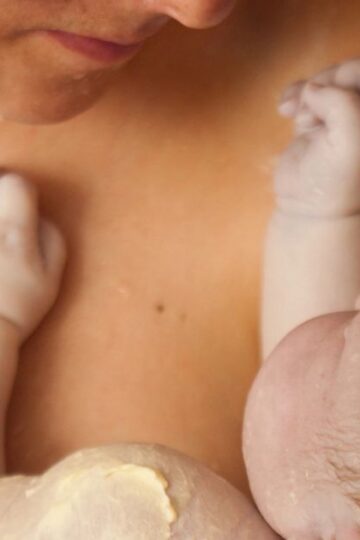
Finally, I’d like to introduce an idea on preventing tearing that is generally not discussed or considered. Minimizing tearing during birth can be facilitated by care providers when they give the opportunity for baby to be born during two contractions – one for the head and the second for the body – and not just one.
After the head is born, by allowing the baby to instinctively rotate on its own and waiting for the mother to experience another involuntary push, the body will be given the space it needs to birth in a gentle way. (BACKED BY RESEARCH, Y’ALL —->>>>> SOURCE)
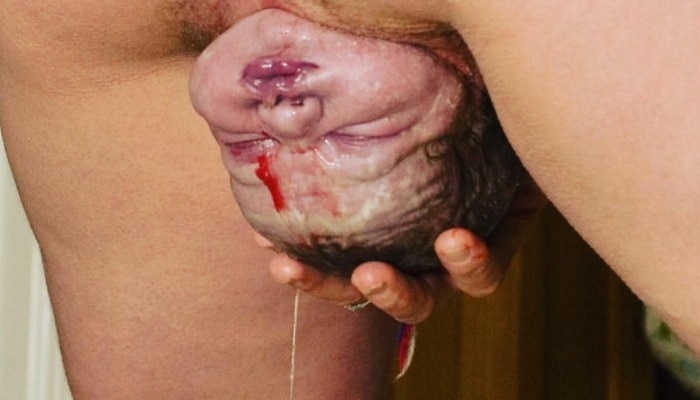
(Photo Credit: Indie Birth Association)
Having said that, I realize this is a tall ask of most care providers. You see, the standard procedure for most is to intervene if the baby’s isn’t completely born within 30 seconds after baby’s head.
I experienced this first hand at my son’s birth. I pushed my son’s head out during one contraction, that contraction went away (as they always do), and I stopped pushing while the rest of his body remained inside of me. My midwife, however, impressed it upon me that I should continue to push and get him out NOW. I remember her saying, “PUSH, Lindsey!”.
Based on how my midwife was acting, it seemed like an emergency. However, years later I looked at my records and there was no huge lapse in time after his head was born. My body was just waiting for the next contraction. I wasn’t given the option to wait for the next contraction because my midwife pulled my son out after that. That’s when I felt myself tear.
30, 30, 30
A few years later, I became a birth assistant and was given the opportunity to witness women and babies having the time and space to deliver baby’s head and body in more than one contraction. It was affirming to see this happen with no adverse affects.
However, I will say that if you’re accustomed to GETTING THE BABY OUT NOW, waiting for the next contraction after the head comes out, will feel like one of the longest waits of your life.
While baby’s between two worlds, it may be best to wait. During this challenging time, grab a cup of tea or sit on your hands. 😉 According to Barbara Harper, if after 30 seconds of waiting nothing happens, move mom into a new position. Every 30 seconds after that, try a new position until baby is born. 30, 30, 30.
Tearing during birth is a common fear of expectant mothers, with good reason, as a local OB once told me that the average first time mother experiences a second degree tear. It would seem that the use of perineal massage during pushing, the preferred method to prevent tearing during birth at the hospital, is not working. So then, what does work? Perineal massage, when done during pregnancy, has been shown to reduce the risk of an episiotomy with first time moms. However, in my experience, this risk is drastically reduced by choosing the right care provider. Have a talk with your care provider and ask them about their episiotomy rates. As an Amazon Associate and member of other affiliate programs, I earn from qualifying purchases.
Tips for How to Prevent Tearing During Birth
Materials
Instructions
Notes
Recommended Products

I gave birth to my son on my back but elevated. I had monitors on me due to induced labor because of low fluid. I did not move around as much once the monitors were on I didn't get off my back much and I had a small tear. Next time I would like to try on my hands and knees.
Sounds like you did your best! Good job! 🙂 Birth is unpredictable and all we can do is "the next best thing".
To be completely honest If necessary Best advice is to let the nurse cut you. Because it is less painful if the nurse makes a small snip( - )than for you to tear naturally( / )which is way more painful and can cause a lot more damage trust me when your in labor you'll see what I mean.
The evidence just doesn't back up episiotomies over natural tearing. Sorry!
I actually heard the opposite as to tearing is better because the jagged tear line will heal much quicker together than the straight cut.
I've heard the exact opposite. a clean cut will heal better than a jagged tear will.
Actually, I have had no end of problems over the years from scarring after a natural tear, as the tear didn’t heal neatly and sometimes friction during sex can cause it to get sore (even 21 years later).
In an earlier birth I had an episiotomy and had no issues at all.
Also, we have many layers to our skin and a natural tear might only tear the top layer, whereas an episiotomy instantly tears through all layers making it much deeper. Think about a piece of cloth. If you try to tear it naturally, it will be hard to tear. Now, using scissors cut a small cut in the material and put the same pressure against it. Which tears more easily? That being said in regards to the comment, I tore terribly with my first baby and have had three others since without one stitch! Keep your mouth relaxed and open, imagine opening with the contractions, not fighting them, and if possible, feel your baby emerging with your own hand. Those steps will all help to prevent a tear. It's amazing what our minds and bodies are capable of!
So true! I was just thinking about this the other day. My first I was 16 hrs in labor as the baby was crowning the Dr cut me so the baby would come out. My second i was in there 1 1/2 hrs. And i was so mentally prepared. My doula was so great the baby just came no problem no tears. My third i was induced due to low fluid. I had a doula but she wasnt coaching me and I felt like I was fighting the contactions and was so tense...finally i said to myself I accept this pain and the baby needs to come out. After that contractions came and i felt them fully vouple contractions later baby started coming out! Your so right about your mind playing a big part!
I just had my first baby and had a bad tear tons and tons of stitches. I am worried about having another baby and tearing again Also I feel that from scar tissue the area is even tighter, anyone else experience this, and have an ok second birth?
I agree the evidence does not support episiotomies anymore, I am greatful I never had one, but healing from a large tear has taken three months and is still tender so I can't say which I think is better for healing speed. This is a great article and I will definitely be trying some of the options listed to help prevent tearing with my second. After having a deep 2nd degree tear almost 3rd I am retried to have another!
I had horrible tearing with my first, and felt that tightening as well. Just had my third, and each time got significantly better, and I had less tearing. Also the tight feeling was way better after having baby #2, and is gone after having #3! Time will help, don't worry! It took the full 6 weeks to heal with #1 (or longer) where the other 2 I felt better very quickly after. Good luck!
I disagree; the episiotomy will actually just cause a larger tear because it's already been cut. The cut doesn't just "stop" at the end of the episiotomy, it tears more and more usually as the baby comes out.
Let me tell you that my " small snip" did not feel very small and now I have scar tissue there! It was extremely painful for days after and the healing was so painful! Sits baths only helped while using them. I didn't want to be cut. They obgyn did so without my permission. I will avoid that next time at all costs.
I agree. I've been a delivery room nurse for 20 years and an episiotomy when necessary is the way to go. Also, the idea that a woman wants to kiss/get in the mood, during labor is laughable.
It may be laughable, but I am a firm believer in informed consent and to know ALL the options. Who are we to censor information from women when they're making plans for their births?
I actually just saw a show where a DR was doing research on the affects of arousal helping mom to deliver her baby safely and easier with minimal tearing and reduced her pain b/c she was not allowed medicine due to her allergies to them. I truly believe that our bodies were meant to do all things natural and there has to be some link to what happens down there during a climax that would help to reduce damage and pain.
You can say that episiotomy is better than tearing only if you have experienced them both yourself and can compare. Which I'm sure you haven't - and this is a thing that can't be evaluated from the outside. With my first child, this ” small snip” was not small al all, and more of a hell than labor itself - for months afterwards it hurt terribly 24 hours a day! There is an awful scar in its place that is very ugly and visible, but the strangest thing that shocks me is that it sometimes still hurts 12 years later, it's like phantom pain! The second time labouring I had a tear that was stitched, but to my great surprise it almost didn't hurt postpartum, it didn't give me sleepless nights and there's no scar left in its place. And it didn't affect my sex life afterwards whatsoever. After the episiotomy, attempting to resume sex was also such hell that my first husband and I eventually divorced. Only in a year and a half after giving birth to my first child sex started to feel comfortable. I believe episiotomy may only be needed in life-threatening cases for the baby or mother.
Yes, in my experience this has been true - episiotomies are helpful in life threatening situations, but when given for other reasons the work of recovery is much worse than the perceived benefit of an episiotomy.
The arousal thing makes a lot of sense to me. I've never been in a delivery room, so I can only igagine how invasive, forced, and uncomfortable it is. However, I do know my vagina.
I once had a sexual partner that had such a fat penis, that if our foreplay wasn’t enough that he couldn't fit. Lube alone wasn't enough. Higher levels of sexual arousal allowed my muscles to relax enough to stretch more than lower levels of arousal.
Sorry- that is insane. This is horrible advice. Please do some research. Episiotomies do. not. help.
So so so wrong. So bad.
I also was induced and was on my back for most. Baby was stuck so they flipped me to hands and knees, I ripped bow to stern. And she was only 6 pounds 2 Oz so not a big baby.
The doctor I had used warm cloths for the perineum. It was most welcome. I am pregnant with baby 6 and never needed stitches, only had what they called micro tearing. I gave birth on my back with all of them, even though I tried hands and knees and side laying, baby didn't want to come out. I think my diastasis might be partially to blame for that. Hoping for no tears this time, too.
I had an in hospital birth with a midwife for my recent birth and they did also say that water birth can increase tears, but having had no tearing with my first, I still wanted a water birth. After I got stuck at 8 cm for nearly 3 hours, I opted to have them break my water, there was questionable meconium (water was tinged yellow, enough that they called it meconium but admitted they weren't sure), so water birth out due to hospital policy. Ok fine. So I continued my squatting through labor, laid down to be checked because I was feeling like pushing, and there was no freakin' way I was getting up. It felt so good to lay down. Indeed, nearly 10cm, slight cervical lip, midwife moved it with the next contraction and I started pushing. I tried laying on my side and just felt like there was no way baby was coming out like that, like I couldn't push him hard enough. I got comfortable on my back and that was how I felt I was most productively moving baby out. My midwife did use warm compresses but it was a lost cause, baby was 10.9 and sunny side up - 3rd degree tear. Afterwards I was all "dang it I should not have pushed on my back!" Midwife assured me I likely would have torn regardless of my position due to baby's size and OP presentation. I was thinking I would squat for future births but I think I'll go hands and knees next time, which I tried laboring in after they broke my water and just was not feeling it..ill have to try harder for that next time. Potentially dumb question, what's the difference between squatting and kneeling?
I bet the best way to answer that question is for you to squat and then kneel. Feel which muscles are straining and which aren't. When you're squatting it's much more strenuous and there's a lot of potential pressure on your perinium.
This is a great article Lindsey! You just don't see very many sources discussing the different ways you can push. I think people just assume there is only one way or that it doesn't matter. Thank you for this very informative article!
You're welcome,
Denise! Thank you for your sweet comment.
I had all 5 of my babies at home. Squatted all 5 times (that was my instinct, I physically could not be in another position), the last 2 I squatted with a birthing stool. The first 4 babies, I tore, the fifth I didn't. Difference? I studied Ina May while pregnant with 5, I really learned how to breathe properly and make those "low sounds". Which were a bit more embarrassing, I felt like a cow lowing, but for the first time - CROWNING DIDNT BURN!!! I was amazed because that is the part I worry most about, and there was absolutely no ring of fire! And no tear! Thank you Ina May! Also did the warm compress to support perineum, but I had done that in previous births too. The low sounds are where it's at, and totally understanding the mind body connection and how to breathe, keep your face relaxed, and make low noises.
Forgot to add, that for me personally, being on the birthing stool with the last 2 made pushing more difficult and even a bit longer. If there is a number six, I will re read all my Ina May, ditch the birthing stool, and keep my warm compress. And kissing the hubby in the early stages was very nice, it was relaxing and made it a much more connected special experience. Once family and midwives showed up, so did inhibition and we stopped that, though it would have been nice to continue through. Maybe if you are kissing all the way through it isn't awkward during pushing? Good luck!
Which books of hers did you read
If only kissing turned me on ):
Hi I have 4 babies my first baby I had to be cut omg it was so horrible to recover from it after my 2nd baby I didn't need to b cut or I disn't tore myself my 3 and 4 th were my big beautiful boys and I tore myself on them which don't gt me wrong it was sore but not at all as sore as being cut and on my first I has an epidural didn't work my other babies were just with gas and air they were better and faster
What book if her's did you study?
this post is so informative, thanks very much for sharing
I never realized what they were doing as I was pushing until I read it here! I am definitely asking them to not do that this time!! I had a slight tear that required but was very painful.
Happy to help! Thanks for stopping by.
This is a great post wish I had read it before I had my first.. I pushed in squatting position and they did hands on perineal massage etc. And I ended up needing an episiotomy to avoid a tear. My second I pushed on hands and knees and the doctors didn't interfere with the perineum they only dud warm compresses and i had no damage to my pereneum. Thanks for informing new mothers of this to help them make the best decisions for there bodies and babies.
Your vent is RIGHT ON! The stretching was by far the most painful part of my experience, so much so that I eventually yelled at the midwife to stop. Not my proudest moment. I can't say if it was or wasn't the reason for my 2nd degree tear, the cord was wrapped around her neck preventing her from turning into position. I will definitely ask for a warm compress next time.
I disagree. It was a proud moment. You made your voice be heard!! Good job.
I wish I knew the stretching wasn't going to help with my first. Hours of it and it caused so much trauma and swelling that after the episiotomy they sewed me up and days later when the swelling went down the stitches were loose! Fast-forward 6 months later and I was back in the hospital getting a repair. My next will not be different.
I meant I will be different and I will not allow this "procedure".
That's right, my friend! It WILL be different! I'm so happy you read this article. ♥ Much love! ~Lindsey
Indeed!! It's your body, you can yell if you want to!! Thank you so much for this article. I am 39 and have no children yet but my love and I want atleast 2. I'm not as young as I used to be. So any tips on keeping things in order down there are welcomed. I am so very much in tune with my body and I feel very confident now. Thanks ladies!! Now to get my man home from war. He's been gone over a year now so I feel it won't be long after he gets home that we conceive. I appreciate you all so much!! Bless you and all of these beautiful babies!!
So I am having my second baby in November. I am wondering if a second time mom is out of luck with tearing? I had a 2nd degree, I was induced last time due to cholestasis, which is 85% chance of getting it back. Any advice?
Take heart! I have found that many second time moms tear less than first time moms, even if the pushing time is faster the second go around. See if this time your care provider will try warm compresses! I'm betting it will make a world of a difference.
Would you say that second vaginal births tear less than first? I hate to nit pick, but my second birth was actually my first vaginal, and I'm looking forward to never tearing again! lol!
Typically yes. Although there's no guarantee.
Oh your in luck! My 1st and 2nd I got 2nd and 3rd degree tears.... my 3rd? Stayed sexually active and no tearing at all!
Thank you for the much needed advice. I will do my best to recognize too many attempts to stretch. I will also mention the warm compresses during labor.
You're welcome!
This was very helpful, thanks. I'm pregnant with my first baby and found this very informative. For all the pregnancy magazines I've read, I had no idea about the hands on approach and to me it makes logical sense that stretching the vulva and perineum during labour instead of allowing the stretching to happen naturally and from the inside out, is not good.
I had an easy birth with my first, albeit I teared (on the wall, 3 stitches but apparently delicate one) I was in the water, the midwife said I should come out to go on my hands and knees but I didn't want to at the time. I due in December now and all I can think about is that burning pain, I am hoping I can try hands and knees this time (I can't remember which position I was in but it must have been squatting as the water would have been to deep for anything else?!) I would love a home birth but my husband is absolutely panicking about what ifs... The Warm cloths and hands & knees or side pushing was really interesting! Thank you
You're welcome! Let us know how it goes and what you learn. ♥
I'm due in December also- having a home birth. My husband was terrified and adamantly opposed to it at first, until we talked to friends of ours who have had 3 home births and started reading articles comparing the safety of hospitals vs. home. We are having a CNM (Certified Nurse Midwife) which is basically the same as what you'd have in the hospital, only she doesn't have the facilities for c-section or epidural. Also, we live within 10 minutes of the hospital. i would never advocate defying your husbands wishes about something as serious as your baby's birth, but if you can get him to do the safety research, it really is very convincing.
Have an epidural. Then make sure your OB has another patient in labor next door. The nurse had me hold off on pushing to wait for her and I honestly believe the slowed movement of my baby on the way out saved me from the damage!
If someone has a. Epidural simply to decrease tearing it does not pass the risk/ benefit test.
I had a 2nd degree tear with my first and no tear with my second even though he was a pound and a half bigger. The differences were vast. With my first I did not have very good coaching while pushing so I just blasted the kid out and did not have much perennial support. With the second - I talked with my midwife in depth about my desire NOT to tear and she was AWESOME, she coached me through every step. I think one HUGE key to not tearing is controlled pushing while crowning. I crowned for probably 5 minutes just gradually letting his head stretch all of my tissues. It was intense - but totally worth it. Also - I had read Ina May's book and my husband and I did kiss throughout the labor and birthing process. No kissing during pushing but definitely in between contractions and I could physically feel my body relax even though I wasn't "aroused." It was wonderful and I felt so connected to my husband through the whole process.
That is beautiful!! Thanks so much for sharing.
Kudos for the reminder that sexuality plays a role in giving birth! Knowing how much being aroused can help reduce tearing and make the experience more natural for your body, it's sad that any woman should have to feel ashamed about it!
Screw what everyone thinks, no one should be ashamed for touching themselves while they squeeze new life into the world through their own vagina!!
This is a very interesting blog , I learned a lot reading it. My experiences with giving birth to my two children I experienced little to no tearing I was relieved once I seen them putting away those tools. Both births, I gave birth naturally with no pain medication and really really fast. Your absolutely right I layed on my sides before I gave birth because it was the most comfortable way to position myself;I never layed on my back at all until the head was already pushing out I could feel it on my thighs. I will try on my hands and knees with my third child. Mahalo to no tearing !