
How to Prevent Tearing During Birth
Women that take my childbirth classes want to know how to prevent tearing during birth, just as much as they want to know how to have a natural childbirth. It's a very important topic that's unfortunately riddled with misinformation.
A doctor once told me that the average first time mom will get a second degree tear during childbirth. Basically, he believes most women tear significantly from childbirth. The underlying assumption is that a woman's perineum is not made to withstand the stress of childbirth.
I call bullshit.
If that were true, then all women, no matter where, when, or how they give birth, would have second degree tears as well. However, this is simply not the case. Many women that give birth in and out of the hospital are able to prevent or reduce tearing by following simple guidelines, many of which are discussed in this post.
The thing is, obstetricians are surgeons and are therefore very comfortable suturing a woman's perineum after birth. Suturing is their jam! Because of this, I think they are less inclined to learn how to prevent tearing during birth, because at the end of the day, they can just sew a woman back together.
However, a postpartum recovery with minimal tearing and suturing is much more pleasant for a woman than if she's stitched to high heavens. It is a worthwhile endeavor to learn how to prevent tearing during birth.
How to Prevent Tearing During Birth
Whether you're planning for a natural birth or a medicated birth, in or out of the hospital, the following are 5 surprising ways to prevent tearing that will change the way you give birth.
1. Choose Birthing Positions Wisely
Squatting Increases Tearing
The first thing we need to talk about is squatting. When in the squatting position, compared to being flat on the back, a woman's pelvis opens 20-30% larger than it would otherwise. A greater outlet equals an easier birth. Isn't that amazing?!
In conclusion, us Americans should squat and push our babies out just like the women in below video, right? Eh, maybe not.
You see, according to this study (and many of the midwives I know), pushing in the squatting position greatly increases the chance of tearing. Squatting, using birth stools, or even squatting with a squat bar, all lead to an increase in tearing.
In a nut shell, if you are a typical sedentary woman, you probably should re-think squatting during pushing. However, if you're like the 1970s Southern Brazilian Indian women in the above video who squats to rest, your body may be able to handle squatting during pushing.
If you're up to the challenge, visit Katy Bowman and teach your body to squat.
Side-Lying, Kneeling, Hands and Knees Decreases Tearing
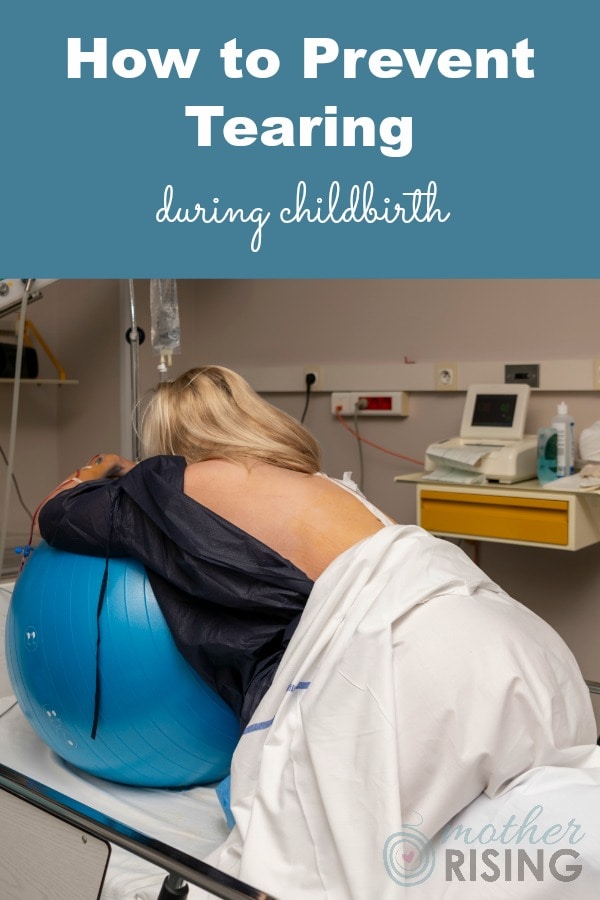
The semi-reclined lithotomy position is what most women use when pushing at hospital births. Despite the convenience this position offers care providers, it's one of the more common mistakes that don't actually prevent tearing.
On the other hand, positions associated with a reduced risk of perineal damage are lateral positions like kneeling or a hands and knees position.
Midwife Thinking says,"I have noticed that when women are left to birth instinctively, they will often move from a squatting position – if they got into one – into a hands-knees position just before the head crowns."
(That's exactly what I did for my births. At some point in all my labors I squatted, but Gabriel was born in the side-lying position, Eden was born in the kneeling position and Mercy was hands and knees.)
If you really want to squat in labor, go for it, maybe just move to hands and knees just before crowning.
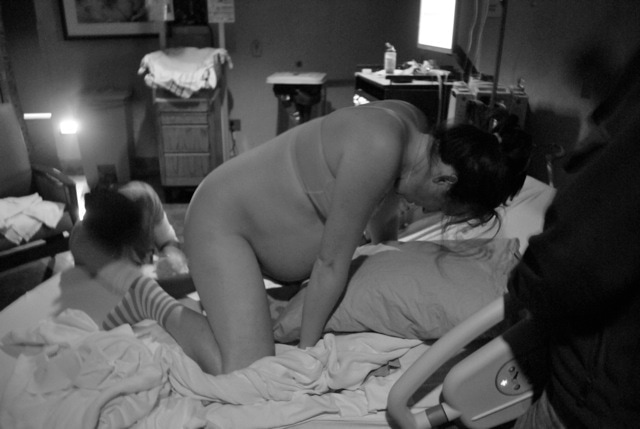
2. During Waterbirth, Continue to Support the Perineum
Unfortunately, it seems that waterbirth, although safe for mom and baby, has an association with tearing. I talked with my midwife, and she agreed with this. She definitely sees tearing with waterbirths.
Maybe this phenomenon happens because care providers are more hands off when a woman is in the water. Or maybe it's because care providers aren't pursuing gentle birth in any venue - land or water. Either way, I have some solutions.
Even when in the water, women should continue to use the information discussed in this article. The same techniques to prevent tearing on land can be used use in water.
- Choose lateral positions like kneeling or hands and knees.
- Provide firm support to the perineum with warm compresses.
- As much as possible, relax.
- After the head is born, wait.
When I gave birth in water I did tear, but it didn't require stitches. A waterbirth isn't necessarily a death sentence to your perineum, but it's definitely something to take into consideration to prevent tearing during birth.
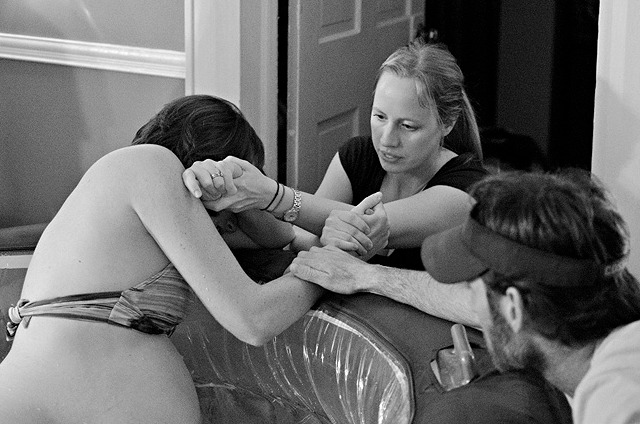
3. Rethink Perineal Massage
Perineal Massage During Pregnancy
Many women wonder if perineal massage during pregnancy can reduce tearing at birth. Perineal massage is when two lubricated fingers are placed in the vagina, and pushed down and to the sides to "pre-stretch" the skin prior to birth.
The evidence says that perineal massage during pregnancy will help a first time mom decrease the chance of an episiotomy. However, in my experience a woman is more or less likely to receive an episiotomy depending on who her care provider is.
If you are a first time mom and are at risk of an episiotomy, perineal massage during pregnancy may help. Hope on over to this post for more information and instructions on how to do perineal massage at home. And remember, it's not really a massage. 😉
Perineal Massage During Pushing
When parents hear the term perineal massage they typically imagine something that’s done during pregnancy. However, many care providers provide perineal massage during the pushing stage of labor to help reduce tearing.
- While mom is pushing, her care provider will sit at the bottom of the hospital bed or stool, gowned up with gloves on.
- Next, they place their outstretched hand towards the nurse, who squirts lubricating jelly on their two fingers.
- After that they take their two fingers and place them in the vagina and push down and to the sides. On a clock, picture 3 o’clock to 6 o’clock, 6 o’clock to 9 o’clock, and then 9 o’clock to 6 o’clock.
- Rinse and repeat.
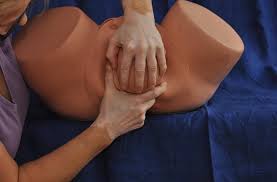
Watching this looks incredibly uncomfortable, almost painful. And if not painful, then by golly it’s gotta be totally distracting! Sometimes these moms get 30 to 60 minutes of this! The vulva becomes swollen, and leaves me feeling frustrated, mad, and sad.
And what really makes me frustrated is that nurses do this technique too when baby is crowning (before they call the doctor in). Nurses learn from doctors, assuming it’s an evidence based practice.
This hands on approach to supporting a perineum is one of the biggest pet peeves I have about hospital births.
Does Perineal Massage During Pushing Work?
My feelings and anecdotes aside, however, the research does not support the practice of perineal massage during pushing.
“Perineal massage in the second stage of labour did not have any effect on the likelihood of an intact perineum, perineal trauma, pain, or subsequent sexual, urinary or faecal outcomes, but was not harmful.” (SOURCE)
Use Warm Compresses to Prevent Tearing
So far what we've learned is that squatting and lying on our backs increases tearing, but a side-lying, kneeling, or hands and knees position decreases tearing. We've also learned that perineal massage is mostly worthless. So what else can we do to prevent tearing during birth?
Warm compresses have been shown to help decrease the incidence of tearing, which is wonderful news because using warm compresses is so simple.
How to use Warm Compresses at Birth
Supplies Needed: All you need is very warm water and washcloths. Here's an inexpensive 24 pack of washcloths. A crockpot can help keep the water warm. Here's an inexpensive 3 quart one that's only $16.
Instructions: Take the washcloth, submerse it in the very warm water, wring it out, and then place it on the perineum with firm support while baby is crowning.
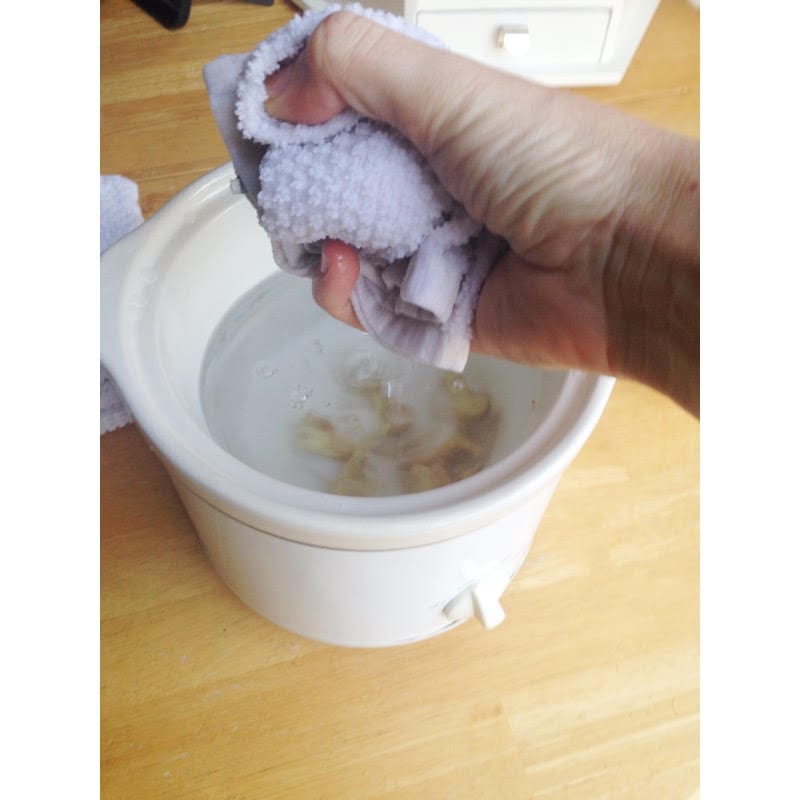
Warm Compresses at a Hospital Birth
I've seen this done in the hospital once and it was the OB's idea (awesome!). He asked the nurse to grab a basin, fill it with warm water and get a stack of washcloths. It took about 2 minutes to setup and mom was so grateful for the extra support.
Ginger Compresses for Pushing
Using warm compresses to support the perineum is standard protocol at out of hospital births. At homebirths you will often find a crock-pot filled with warm water and ginger simmering, in preparation for the pushing stage. Ginger helps reduce inflammation and smells great too!
Once pushing and crowning begins, the crockpot is brought to wherever mom is.
TIP: Make sure the water isn't hot. Once it reaches the desired temperature keep the crockpot on the warm setting. If it's burning your hands when wringing out the washcloths, it's too hot for mom's perineum.
BONUS TIP: Keep a stack of washcloths handy. If a washcloth becomes soiled, you'll have a fresh one right there. 5-10 washcloths will be plenty.
4. As Much As Possible, Relax
Tension plays a role with tearing during birth. Anything a woman can do to reduce tension and encourage relaxation will help the body to do what it instinctively knows to do. An easy way to think about this is to encourage a birthing environment that is conducive to oxytocin and eliminates adrenaline. The same environment that helps make a baby helps get the baby out. 🙂
The following are specific ideas ways to experience a more relaxing birth.
Eliminate Fear
When the body is fearful, it instinctively tenses to protect itself, which makes so much sense. What doesn’t make sense, however, is a tensed body during birth. One way to eliminate fear at birth is to to address fears prenatally, as much as possible, so as to avoid the fight or flight response during birth. It is possible to give birth without fear!
Relax the Jaw
During birth it may be difficult achieve total relaxation if all a woman hears is to “just relax”. Being more specific by pinpointing a specific body part is much more doable. Try saying the following to yourself, or a laboring mother, and you’ll likely be more helpful.
“A relaxed jaw is an open vagina.”
Try Kissing
A fun, and even more effective way to relax the jaw, is to kiss your partner. Not only will the jaw relax (hopefully!), but your body will release more feel-good, labor encouraging hormones like oxytocin and endorphins. According to Ina May Gaskin, she’s never seen a woman kissing her way through pushing that also tears during birth. If that’s not fabulous news, I’m not sure what is. 😉
In the video below, she explains how a chimpanzee, obviously without inhibitions, was using its hand/fingers to arouse itself while it was pushing its baby out (without tearing). Ina May believes that if we get the blood from our head, and move it to our vulva, we won't tear because we'll get REALLY BIG.
Don’t Forcefully Push
If a woman is pushing in a way that is forceful and unnatural, odds are she is experiencing coached pushing instead of spontaneous, undirected pushing. For a woman that is unmedicated, it’s best to be hands off physically, but also with directed pushing.
Coached or forced pushing may sound like a nurse instructing a woman to hold her breath while counting to ten, two to three times during each pushing contraction. It may also look like a doctor or midwife telling a woman to push after baby’s head is out, but between contractions, when she has no urge to push. (You can read more about this phenomenon below.)
Push with Great Strength, Slowly and Gently
Instead, it’s best to push instinctively with great strength, but slowly and gently. Before baby is crowning, it may be helpful to envision pushing with the strength of a gorilla. However, when baby is crowning, pushing slowly and gently is a great way to prevent tearing.
Listen to your care provider as they guide you through these intense moments of birth. You may want to push like a wild woman and “get the baby out”, but anything you can do to allow things to unfold slowly will help keep your lady bits intact.
5. After the Head is Born, Wait
Finally, I’d like to introduce an idea on preventing tearing that is generally not discussed or considered. Minimizing tearing during birth can be facilitated by care providers when they give the opportunity for baby to be born during two contractions – one for the head and the second for the body – and not just one.
After the head is born, by allowing the baby to instinctively rotate on its own and waiting for the mother to experience another involuntary push, the body will be given the space it needs to birth in a gentle way. (BACKED BY RESEARCH, Y’ALL —->>>>> SOURCE)
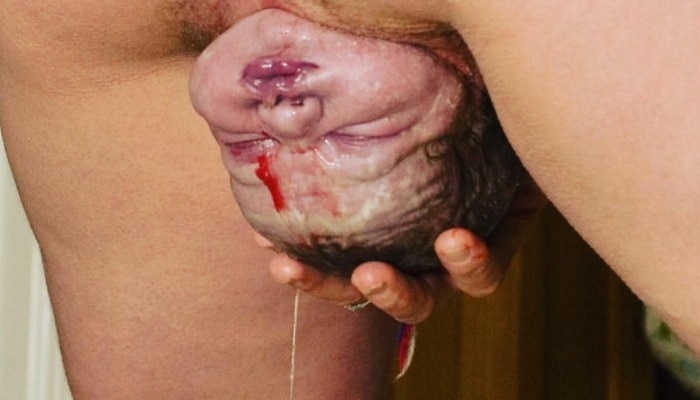
(Photo Credit: Indie Birth Association)
Having said that, I realize this is a tall ask of most care providers. You see, the standard procedure for most is to intervene if the baby’s isn’t completely born within 30 seconds after baby’s head.
I experienced this first hand at my son’s birth. I pushed my son’s head out during one contraction, that contraction went away (as they always do), and I stopped pushing while the rest of his body remained inside of me. My midwife, however, impressed it upon me that I should continue to push and get him out NOW. I remember her saying, “PUSH, Lindsey!”.
Based on how my midwife was acting, it seemed like an emergency. However, years later I looked at my records and there was no huge lapse in time after his head was born. My body was just waiting for the next contraction. I wasn’t given the option to wait for the next contraction because my midwife pulled my son out after that. That’s when I felt myself tear.
30, 30, 30
A few years later, I became a birth assistant and was given the opportunity to witness women and babies having the time and space to deliver baby’s head and body in more than one contraction. It was affirming to see this happen with no adverse affects.
However, I will say that if you’re accustomed to GETTING THE BABY OUT NOW, waiting for the next contraction after the head comes out, will feel like one of the longest waits of your life.
While baby’s between two worlds, it may be best to wait. During this challenging time, grab a cup of tea or sit on your hands. 😉 According to Barbara Harper, if after 30 seconds of waiting nothing happens, move mom into a new position. Every 30 seconds after that, try a new position until baby is born. 30, 30, 30.
Tearing during birth is a common fear of expectant mothers, with good reason, as a local OB once told me that the average first time mother experiences a second degree tear. It would seem that the use of perineal massage during pushing, the preferred method to prevent tearing during birth at the hospital, is not working. So then, what does work? Perineal massage, when done during pregnancy, has been shown to reduce the risk of an episiotomy with first time moms. However, in my experience, this risk is drastically reduced by choosing the right care provider. Have a talk with your care provider and ask them about their episiotomy rates. As an Amazon Associate and member of other affiliate programs, I earn from qualifying purchases.
Tips for How to Prevent Tearing During Birth
Materials
Instructions
Notes
Recommended Products



HI. Im a second time mom (23 weeks now) who has had my heart set on a natural waterbirth. After a not-so-awesome medicated hospital birth experience with my first, I began to research natural birth to try to prevent the same experience twice. I decided after research that a waterbirth is the way to go because not only does it supposedly reduce labor pain, it also supposedly prevents tearing and has all the other awesome benefits that I cant think of to type at the moment. I was pretty scared of natural birth at first so these great reviews of waterbirths really gave me comfort- particularly about the supposed reduced risk of tearing. I had an episiotomy (not bad, only 1st or second degree) with my first and had read that women who had an epi with a first pregnancy have like a 50% chance of tearing second time around and Im really really scared of feeling that pain. So I say all of that because this is the very first article I've come across that says contrary about water births and I'm wondering if you can give more info/advice on that? Thanks!
Hi! First let me just say that if you tear naturally your recovery will be way better than your episiotomy recovery. So take hope in that. Frankly you just have your baby where you feel most comfortable. If that's in water, great! If that's on land, great! Maybe you could spend time laboring in the tub and come out to push? Just an idea.
Much too late for Liz, I am afraid, but I had three children and the last two of them born in water without any tearing. My first was born in hospital and assisted by a gyney who said we are land animals, not water animals. He got me an episiothomy while kneeling and leaning forward. I suffered from it for half a year: sex was awfull in those first months after the birth. The second one was born at home in a birth pool. I waited two contractions when the head was crowning, which probably also helped in the process. It resultee in no tear at all and the best experience of my life. Third one was in hospital due to breaking of water early, but still managed a water birth (with a lot of arguing) and again I waited a bit before the final push and no tear. So for me water birth is what I want in case of a no 4.
Just wanted to add a suggestion from my experience. Have the woman support her own tissues on crowning. She has immediate feedback on an intense 360' stretch, and her hand knows just where to go to minimize pain and damage. Also, allow your body to do the pushing, breathing through contractions to slow crowning. Slow = stretch, fast = tear.
Hello, I've been a traditional midwife now for over 30 years. I've assisted with almost 2000 mommas at this point. I have found that not demanding that our mommas push at 10cm, but allow the body to labor down, and let her grunt her baby out when she has the urge ( usually right before the baby comes under the public bone and begins to crown), no one yelling at her to PUSH, PUSH is the best way to prevent a tear no matter the position. Although I believe through experience that giving birth on your back is as counterproductive as doing it standing on your head. A momma in labor will listen to her body and get in the position her baby needs her to be in if she feels safe and heard, is educated in what is happening in their body and trust and knows her care provider. A relationship, a real relationship is key for the whole experience. I have also found that if the momma puts her own hands on her vagina as her baby starts to crown will contribute to a slow delivery of the baby, no one will protect your vulva better than the owner of that vulva. Thank you. Lisa .Coomer CPM-TN
Thanks Lisa!! This is great advice.
You might like to see this recent ACOG piece: http://www.medpagetoday.com/OBGYN/Pregnancy/58745
In my experience, the best way to prevent tearing during pushing was to NOT PUSH. I had a home water birth after 2 csections. I worked so hard during labor to relax everything mentally and to physically keep all my muscles relaxed. It helped greatly with contractions. When it came time to push it felt so wrong to suddenly tense all those muscles. So I didn't push. My uterus did all of the pushing it needed to do. I remained completely relaxed. My body pushed my baby out in about an hour. Not a tear in sight. In fact, I felt like I hadn't even just given birth.
As much as I would love to say this method will work for all women (because who really wants to push, right?) some women will actively have to use their muscles, their whole body, to push their babies out. I've been at a bunch of births and it's always frustrating for a mama versed in "not pushing" to suddenly realize they're going to have to push with all they've got to get their baby out. Hope that helps!
I've had four babies, all born naturally. The first one was tough, but I really think it was my midwife who made it so as everyone I knew tore badly under her care. I don't know the degree to which I tore but I know it was to my bottom and I hemorrhaged. I feel a great deal of it was because the midwife had me start pushing before I had any urge to push, and I never really felt that urge during the process. She had two labors in the same phase and hoped to speed mine up. I think I pushed before ready and had swelling due to the trauma. She also held a count ("One Two Three Four...") I was sidelying and she used warn compresses, but my body wanted to switch positions. It turns out our son was sunny side up, which also made the birth more challenging.
The second time I was nervous, but I read "Ina May's Guide to Childbirth" and felt more confident. My midwives were more skilled in preventing tears. I didn't bother with perineal massage as I hated doing that the first time. No one told me when to push out for how long. They were patient. I had our daughter on my hands and knees (the position my body chose) and this time I felt my body pushing her out without being told! The midwife was trying to slow me down actually and I couldn't as she was just coming! Such a different feeling than being told what and when to do it! I had a tiny knick and no stitches! Such an easier healing!!!
The third time our baby was sunny side up again and I was concerned. For him, I stood up to birth! It was awesome! I had stalled and my midwives gave me space to see if things would start up again. My husband and I, given the privacy, did decide to try Ina May's suggestion to kiss. It's hard to describe. It was one of the most amazing, intense, experiences ever as I passed through transition. It can be done and it's out of this world! The contractions intensified with the kissingand, he was born with three minutes of pushing with his hand beside his head (I'm sure trying to suck his thumb as he is a big thumb sucker!) I was able to pull him out myself at my midwives prompting and I'll never forget that amazing feeling of victory after a traumatic first birth! I didn't get a single knick, even with his hand emerging with his head. As he came out, I kept saying aloud, "I'm going to get SO BIG! I'm going to get SO BIG!" And I did.
With the last baby, he was tiny and born lightening fast. He was born 34 min from my water breaking and the start of my contractions. It was incredibly intense and I was a bit scared when he began crowning since it was just my husband and I and the midwife hadn't arrived yet (they didn't arrive until 20 min after his birth and it was a beautiful memory of peace as we waited). Because of my first birth, tearing was one of my biggest fears. I didn't have anyone to support me or use lubrication or compresses and I felt so dry, but I remember Ina May saying to open your mouth and that she's never seen a woman tear who touched herself as the baby crowned. I didn't have any time to really prepare, but I got on my hands and knees on the bed at the last second so the baby wouldn't fall to the floor. I balanced on one hand and held myself with the other hand. I could feel him coming and I naturally applied pressure to slow him down. When I felt the second shoulder pop, I moved my hands and my husband caught him. Despite the quick birth and lack of trained hands, I had no tear and we had a completely healthy baby boy. 🙂
Thank you so much for sharing!! What amazing stories. Rock on!
Interesting point about perineal massage, my doctor did this for probably 2-3 hours, no drugs so I felt it all. Honestly I would have rather felt a contraction.. I kept squirming. And I swelled up a lot.. I guess I thought it was from 3 hours of pushing rAther than the "massaging". I thought what she did worked because I had only a minor tear that didn't require stitches. Now that I think about it though, I think what was most helpful was when the baby is crowning and they have you hold it and not push, and let the baby's head slowly stretch things out. this is easier said than done and also maybe easier when you can feel everything rather than if you have a epidural.
Hi! I have a 9 month old, and he's my first baby. I fortunately was able to do a lot of these techniques- gave birth on hands & knees, and used warm compresses. However, I did still tear (second degree tear). I gave birth without an epidural. A woman's hormones are so elevated at that point, so thankfully I didn't feel myself tear at all! Sometimes you do all you can, and it still happens. But I can only imagine how bad the tear would have been if I'd been on my back!
Oh, but I will say, giving birth was the most amazing, empowering, and the most beautiful thing I've ever done! 🙂
Interesting article! I tore with my first. Fourth degree! Apparently my daughter moved her arm/elbow up and out. After what I would call an easy pregnancy, labor and delivery I ended up in the operating room for repair. Tore through my sphincter muscles and had a not so great recovery. We are contemplating having another and I'm terrified. The colorectal surgeon said I should only have a cesarien next time but my doctor didn't think that would be necessary. The surgeon's point was that I shouldn't take the chance of getting any more damage due to the scar and repair leaving my 'back end' muscles not as strong as before. She said "you don't want to be wearing diapers in your late 30's or 40's" to which I cried. I would prefer to have the next one just as the first. I didn't think labor and delivery was so bad. Painful but not unbearable and I don't know what recovery from a cesarien is like but i do know recovery from that tear caused a lot of other issues and concerns for a long time. It's seems like hands and knees may be the best option with warm compress? I had a friend who had a third degree tear and her second with no issues.
Read this with the husband, and he was very willing to help me out with the pleasuring tip, haha. I think this would only be something I would do if hubby and I were alone in our bedroom, having a very private homebirth in our room or something like that. Other than that, I'd be too rigid and unresponsive to it in a place like a hospital, where a nurse or doc could walk in on the moment!
First timer here, 6 month pregnant. I almost wish I didn't read this! Very informative, but too informative for me haha. Now I'm more freaked out about giving birth than excited. I guess I'm just the type of person that would rather find out when I get there, because it's easy to get caught up in your own head if you know too much. Definitely looking into Ina May though!
My best suggestion is to read positive birth stories and keep them flooding over you until baby comes! I've had four babies but it's always a neat moment each time when I pull out "Ina May's Guide to Childbirth" and re-read it. Even after already having some AMAZING birth experiences, other people's horror stories can get into my head. I really believe that our bodies do respond to how we feel about birth. If we are terrified, they act accordingly and tense up, sometimes creating problems that wouldn't have occurred. However, if are positive and peaceful and trusting, they can function to their optimal potential. Read those positive stories and don't be afraid! Your body is amazing! It's already growing a human! 🙂
Wow, what a fantastic post! I see you linked to my blog on protecting the perineum written in 2013. I wanted to let you know that I've since updated my post. I strive for evidence based writing, and some of my older posts could use updating, clearly. And while nursing school and has made me a better critical thinker/researcher, the all-consuming demands of my program have me otherwise committed. Thanks to your fantastic post I can that I did not adequately state enough the importance of avoiding widely flexed knees when pushing. Nor did I clarify that pushing in a deep squat position is not recommended when baby is crowning and how this position might tax the dexterity of the skin. Thanks again for putting together such an informative post! I would value the professional courtesy of hearing from you should you link to any additional blog posts of mine. Thanks so much for supporting birth and families!
Thanks, Joy. Good to hear from you! ♥
Thank you for this post. I'd love to be in a position to help me daughter not have the same kind of outcome that I did.
11 years ago I had a late joy baby at age 34. My labor stalled and my birth attendant did not seem to know how to help me. while he was sitting with me I heard the squeaking sound and felt the discomfort of his gloves as he kneaded my perineum. He left when I stalled. I sat myself up as much as I could thinking it would get things moving. It worked and I got moving again, but I also tore through my pelvic floor as well as partially through my anal sphincter. As quickly as the placenta delivered my birth attendant was called away on an emergency. He never returned to stitch me up and I did not realize I was in such a bad way until I was home with the baby. I healed up the best that I could without a repair. I was left with a rectocele and a cystocele and a low uterus. When I saw a doctor I was told I would need to have reconstructive surgery because I have muscle tearing and no perineum to repair. The consolation prize was I was also offered a hysterectomy. I've mourned over this, but have felt concern about the the possible outcome from repair surgery. I've worried the result would be less than desirable. Mesh has too many problems and I was so glad that I did not do that. That was the reapir of choice after my son was born. Now a simple purse string repair for the cystocele is the most likely option, but they don't last forever. I was left in less than desirable condition, but I am aware that things could get worse.
I wish so much that I could turn back the clock and get better care.
My hope is to prevent my daughter from having to follow in my foot steps.
Hi!
Thank you for this post. We have 22 mo-old twin girls and are getting ready for baby #3.
The twins were born at 30 weeks by an emergency c-section and I hoping to have a vbac now.
Since I've never actually been in labor, all will be new to me!
But what scares me the most is the possibility of tearing.
My mom was seriously hurt when giving birth to me and she has scared me a lot with that story.
:/
My mom had 4th degree tears (from vagina to anus) with my brother and I. When I was planning my VBA2C, she reminded me of that. Scared the heck out of me. I've since learned that she was kept on her back, given an episiotomy, and yelled at to "PUSH!" while holding her breath, all of which increased her likelihood of damage. I popped out my 9 lb 11 oz baby with only a 1st degree tear (my OB says it's from his very fast exit). Every birth is different, so don't expect to have the same experiences as anybody else, even our own mothers. 🙂 Good luck with your upcoming birth!
Great article! I was lucky enough to have two births with no tearing. I truly believe that it is because of breathing techniques I learned through Hypnobirthing. I did perineal massage leading up to labour with Evening Primrose Oil as well. But I definitely recommend everyone check out Hypnobirthing. It is definitely worth reading the book or taking the classes.