
How to Get Through Transition Without an Epidural
It is 100% possible to get through transition without an epidural! This article is FULL of wonderful information about how to do just that. Let's go!
What is Transition?
Birth becomes most challenging right before pushing, during the transition phase of labor. Transition is typically the shortest portion of labor, but also the most dreaded and feared. Contractions are long, strong, and close together.
This post is third in the series "The Stages of Labor: How to and Helpful Tips". The first stage of labor has three parts:
- Part 1: Early Labor
- Part 2: Active Labor
- Part 3: Transition
Today we continue our journey through the first stage of labor. In previous posts, we discussed early labor and active labor, and in this post we'll learn all about the transition phase of labor, especially how to get through it without epidural.
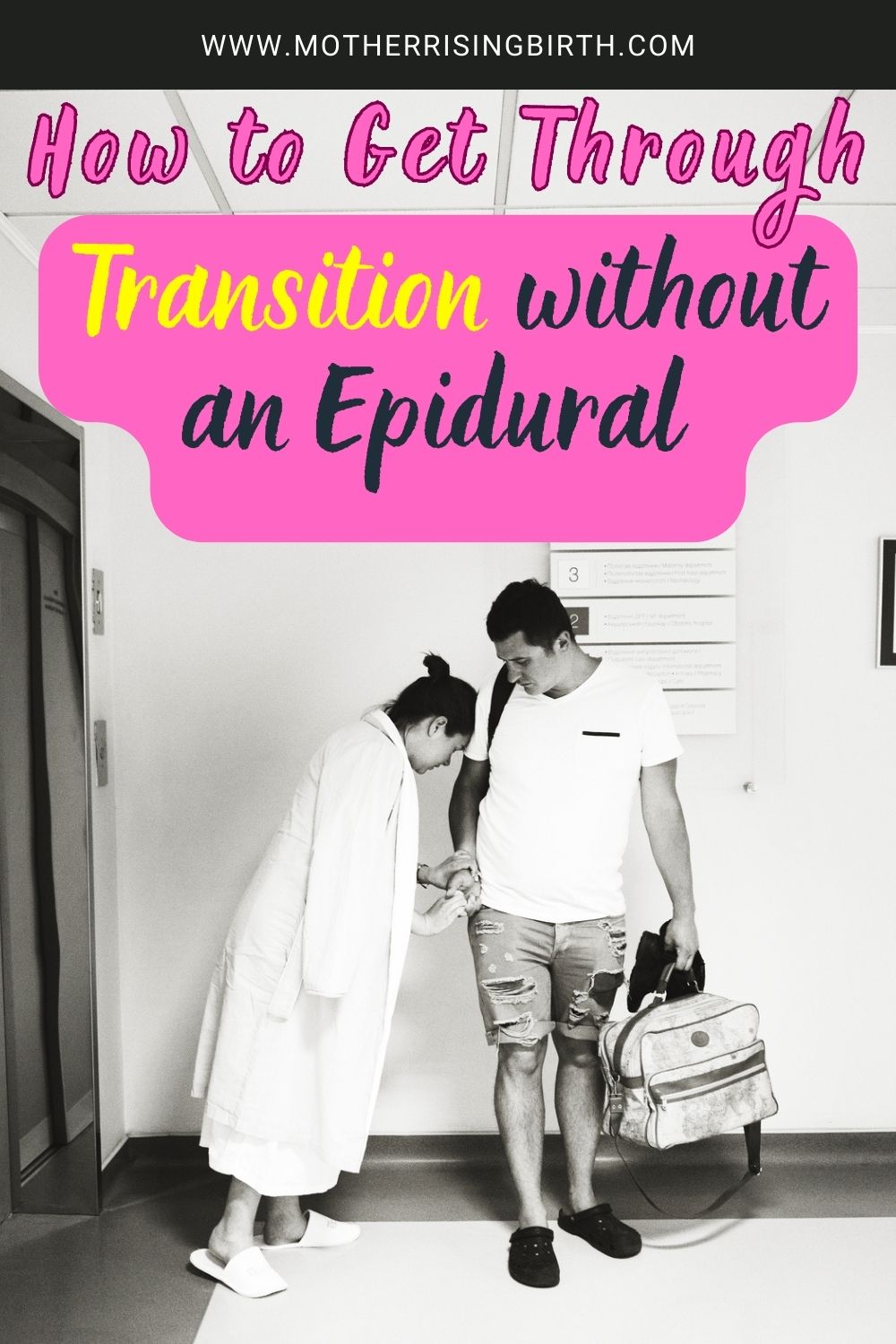
Transition Without an Epidural - You Can Do It!
Like I said above, the transition phase of labor is the shortest but the most intense portion of labor. Transition got its name because it is the part of labor where women transition from stage 1 to stage 2. Stage 2 is pushing. Transition happens right before you start pushing.
Symptoms of the Transition Phase of Labor
If you are experiencing the following symptoms, you may be in transition! Good job, you're getting closer to meeting your baby!
- Very long contractions lasting around 90 seconds
- In comparison, the average active labor contraction is around 60 seconds and early labor is only at 30 seconds
- Contractions are close together, around 2-3 minutes apart
- Instead of completely going away contractions sometimes "double peak"
- Women feel like they're not getting a break. You may hear her say, "I'm not getting a break."
- Hot and sweaty
- Cold and shaky
- Nausea and vomiting
- Crying
- Unable to find a comfortable position
- Contractions increase when changing positions
- Afraid to change positions
- Looking for a way out
- Asking for help
- Water breaking
- Discouragement and/or "giving up"
- Irrational thoughts and behavior (ex: I decided I was going to break my water myself after a failed attempt by my midwife)
- Asking for pain relief/medication
How to Give Birth Without Epidural
Having an unmedicated childbirth is totally possible. There are many ways to decrease the sensation of pain and cope well during a natural childbirth. You can do it!
However, many women receive epidurals from their health care provider during the transition phase of labor because they can't cope and/or their birth team is unable to help them cope. The following are some amazing ideas to add to a birth plan that will get you through this intense portion of birth without epidural.
Remember, you can do it!
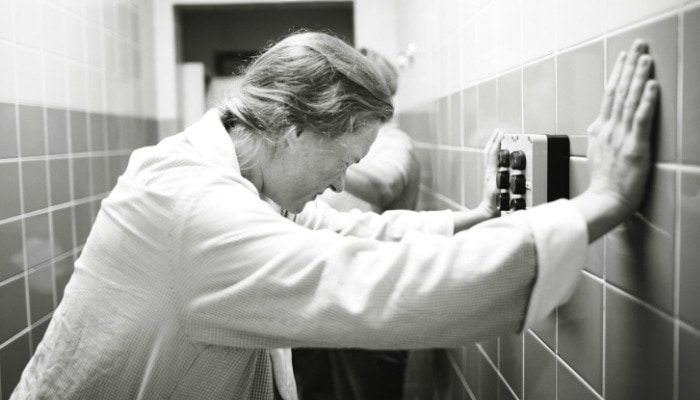
1. Change Positions
One of the best pieces of advice I can give you for coping through the transition phase of labor is to change positions. And change often.
Paradoxically, this is also probably the toughest piece of advice to follow during transition. The thing is, during labor when you get in a position that is working for you, or even if its not, it can be hard to change positions.
When I was in labor and I moved, it sometimes caused additional contractions. I wanted my contractions to go away, or to be less intense, so therefore I thought that if I just remained still things would get better.
However, in order to end the contractions, labor ultimately needs to crank up, get more intense so that you can push your baby out. At some point, you have to decide to accept labor, accept that things aren't going to go away, and bravely embrace the sensations of birth, because those are what will bring your baby and bring the end.
Thoughts From My Birth
Here's an excerpt of my thoughts during my second birth, a homebirth.
Oh. My. Gosh. I was in so much pain. My contractions weren’t stopping. They would peak and then peak again. I cried out for somebody to help me get up and save me because I was in so much distress. After that contraction was over I did a little internal self-talk.
“Lindsey, you need to be brave. You need to get up and move.”
And so I got up and moved. I was brave. My baby was born not long after that.
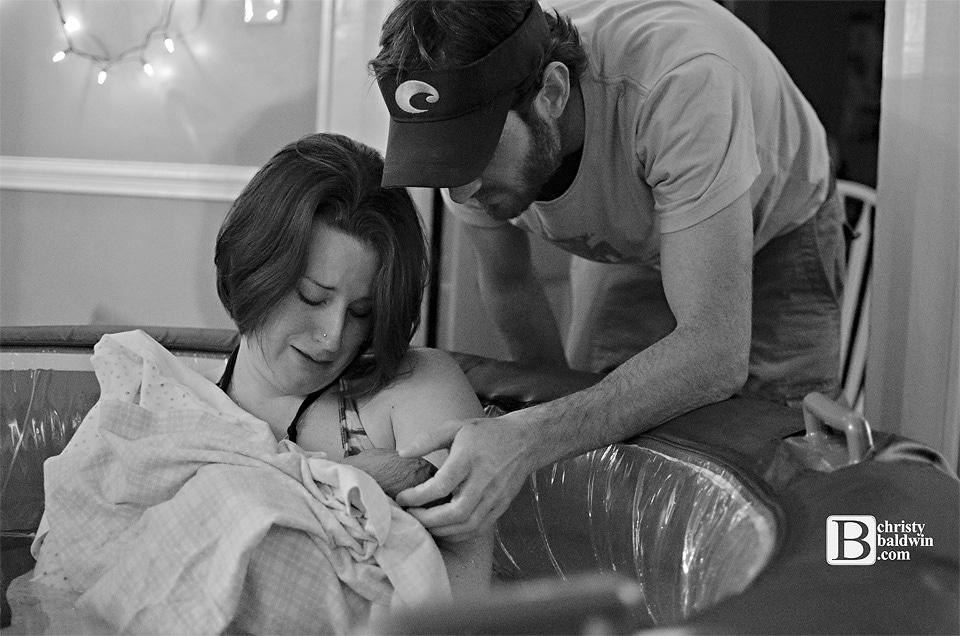
Be encouraged! By being brave and changing positions you might find a more comfortable position and it also might speed up your labor - which is what we want, right?
TIP: The first contraction after a position change can be hard to cope through. If you change positions and it feels AWFUL, try it for three more contractions. If after three contractions it still isn't working, try something new. Sometimes after three contractions you may find that it is actually working for you. Yay!
Here are some positions to try during the transition phase of labor.
- Sitting on the bed
- Standing and leaning into a birth partner, bed, table or wall
- Sitting on a ball
- Leaning on a ball (standing or sitting)
- Peanut ball
- Toilet
- Shower (The shower is the PERFECT place to be in transition. It's so helpful for labor pain!)
- Tub
- Squatting
Head on over here to read more about positions to try during labor for a faster, more comfortable birth.

2. Encouragement is Key
A common signpost of being in transition is feeling like you can't do it. You might say...
- "I can't do it."
- "If I have to do this for another ______, there's no way I can do this." (Remember, labor math doesn't exist!)
- "Someone help me!"
- "I need an epidural. No really, someone get me an epidural."
You know what? When my doula clients start saying these things I know 1) we are getting close to pushing and 2) I need to increase my support and encouragement.
Encouragement during the transition phase of labor is VITAL. If a woman does not have a team of support to rely on, she will often turn to medication.
What to Say
This does not have to be! Here are some suggestions for encouragement during that last bit of intense labor.
- "You get to meet your baby soon."
- "Feeling this way means you're progressing."
- "You're getting closer to your baby."
- Use Penny Simkin's "Take Charge Routine"
- "You are doing it! Right now!"
- Reminders that what she's feeling is normal.
- Read Mother Rising birth affirmations or bible verses for birth
Check out this article for more ideas of what to say and what not to say to a woman in labor!
During transition I often felt like something wasn't working correctly. It seemed like things were hurting far worse than they should and that I wasn't progressing quickly enough. The cost was far outweighing the perceived benefit.
I found it helpful for people to remind me that things were progressing normally, and in fact they weren't even going slowly. When you're in labor it is hard to have an accurate sense of time. Reminders and encouragement are so helpful.

3. Maintain Focus
During active labor a mom might be more tolerant of external distractions like bright lights, talking, the tv, and extra guests. However, during the transition things get more intense, which requires a whole other level of focus.
Unfortunately, instead of enforcing privacy and creating a birth space more conducive to focus, many women request epidurals to accommodate their surroundings instead of requesting the surroundings to accommodate her.
Mamas! This is YOUR DAY! Of all your days here on earth, this is your day to tell others how you want things to go. Better yet, have your doula or "birth bouncer" (baby's father, nurse, etc.) enforce privacy for you.
- Ask observers or other unhelpful people to leave.
- Request silence.
- Dim the lights.
- Enforce privacy.
- Turn off the tv.
It is easier to cope through transition and give birth within a focused birth space.

4. Stay Hydrated
Another important part of coping through the transition phase of labor is to stay hydrated. A simple method of staying hydrated is by offering mom sips of ice water between contractions and with a bendy straw.
To help keep mom energized, diluted juices and electrolyte drinks can also be used. Chewing on crushed ice is amazing between contractions. Of course, I love using electrolyte cubes for labor!
Staying hydrated during the transition phase of labor is important especially if mom is vomiting. Dehydration is the enemy!
By staying hydrated you will help keep yourself and baby healthy, give yourself energy and shorten your labor time. STAY HYDRATED!
5. Stop Complaining
It is really easy to complain during labor, especially transition. However, I've repeatedly found relief when I chose to switch gears and stop complaining.
Frankly, nothing was helping anymore and once I decided there was nothing to be done, I stopped whining about it. And instead of complaining and whining, I focused my energy on to other things.
With my second birth I decided to get up and move. With my third birth I decided to start squatting.
By changing my attitude I eased my suffering, became more productive in labor, and helped myself to progress. Who knew, right?
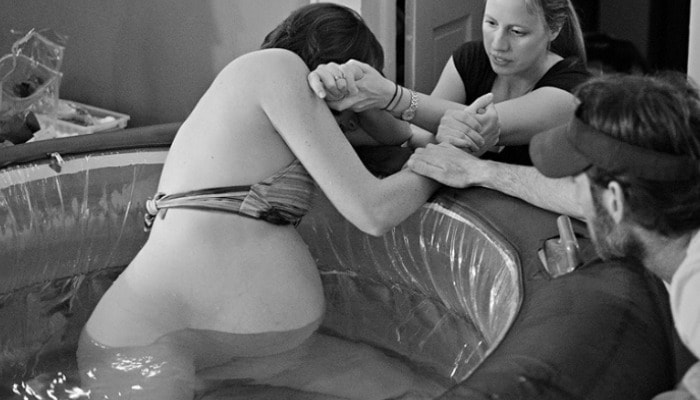
6. Try Something New
During my third birth (pitocin augmentation) I vocalized a lot. It was very helpful!
However, I got to a point where I wanted to crawl out of my skin - nothing was working anymore. My doula's touch irritated me, my vocalizing was not helping things, and I was at a loss.
Here's another excerpt, this time from my third birth where I tried something new.
The vocalizing I was doing was NOT working anymore. Nothing really, was working anymore. I became “that lady” in labor. I’m cold… so they put a blanket on me. I’m hot get it off! Push on my back! No stop! No position felt any better. It was awful. It felt like fire. Fire on my belly and fire on my back. Hot, burning fire.
At one point I decided that I needed a different approach and that I was not coping well. So, I decided to sit on the hospital bed and not vocalize at all. Now, to the observer it probably looked like I was feeling pretty good but it was still terrible. It didn’t get better, the contractions were still hell. However, after doing a few contractions like this I felt a little bit less out of control. My contractions spaced out the tiniest bit (which is probably when Tanashia turned the pit up haha) and I got to doze between contractions. This was my big aha moment during my Pitocin experience. I had the courage to change things up when nothing was working anymore.
Trying something new was scary. However, it actually turned out to be helpful. If you don't know what to do to cope during transition, try something completely new, and possibly a bit scary. It worked for me!

7. Let It Go
My final piece of advice for coping through the transition phase of labor is to just let go. Channel your inner Elsa and just LET IT GO.
As a doula observing births and as a mom experiencing labor, I have found that once we decide to stop fighting labor, but embrace and work with it, our bodies relax and things progress.
Let it happen. Allow your body to open. Let your baby come down.
Giving Birth Without Epidural - YOU GOT THIS!
Ladies, YOU CAN DO THIS!
Don't let anybody tell you that transition is too difficult to birth without epidural. (Sure, epidurals can be used wisely and compassionately. Epidurals absolutely have their place... But that's another blog post.)
You can absolutely, positively have a natural birth! You can make it through transition without an epidural. Birth without epidural is 100% possible! By using the tips, tricks and strategies above you will be well on your way to rocking an unmedicated birth.
Rock on, mamas!

Read the Comments!
For those that had unmedicated births, please leave a comment and let us know how you coped through birth without epidural. If you're pregnant, read the comments. Ladies, these comments are GOLD. Read all about how to have a natural childbirth. You can do it!




With my recent birth, I went from active labor at 6cm to pushing while in the tub. Pain was way worse before getting in the tub, so it didn't seem like I really went through a transition.
My prior birth, I got through transition by kneeling and "breathing my baby down". By focusing on getting baby into position, it was a great distraction from labor pain. I was almost in a trance and, dare I say, contractions were much less painful.
Awesome!
I love the idea of "breathing baby down" but I will delivering in dec and I already know I am going to need to focus on the actual birth and visualize him moving down and out to accomplish natural birth!! Any advice is needed!!
You know, I am never much aware of being in transition. Maybe that is one of the wonderful things about having a doula-I let my monkey brain take over and my doula guides me through. I recall you having me move through several positions at the ends of all the labors.
My sons were born 30 and 26 years ago. Both hospital births. I remember being better prepared with my second. I do remember being in the bathroom with my friend and telling her, "I can't do this. Can't I stop for awhile and go home?" I knew that I couldn't, but I also knew I was in transition.
I am our family's doula. One of the things I found was very important for my sisters was to pay attention to their face. If they had their eyes closed and were frowning and agonizing, I would ask them to open their eyes and look at me and I would hold their hands and we would breath through the contractions. For myself personally, I felt having my eyes closed that I was in a personal hell, it helped me very much to have someone outside hold my hands, concentrate and focus with me.
Still love birth stories. 🙂
This is so important. Keeping eyes open is the best thing to do. I know that for me, I would close my eyes and you perfectly described it... I was in my own personal hell and there was no way of getting out of it. It was like a nightmare that I couldn't wake up from. This next time, I'm going to remember to keep my eyes opened and focus on letting the contractions work for me and not against me.
Further proof that each and every birth is special and unique:). I was the exact opposite! I think I had my eyes closed through the majority of labor and it totally worked for me. That, and my husband applying counter pressure to my hips, through each contraction and groaning along with me. I went from 7pm early labor, active by 1am. Arrived at birth center at 4:20, got into the tub at 5:30. Water broke in the tub and our beautiful boy arrived at 7:22am after 2 short pushes. My doula and my husband were the BEST team.
I had a hospital birth and was 6-7 cm when I arrived at 2:30am. Baby boy was born at 1:45pm (I was at 9.5cm for 5 hours). Luckily, the laboring mother has no concept of time, and the whole labor/delivery felt like maybe 6 hours rather than almost 12 hours. I vocalized a lot ("shhhhh," "ahhhhhh,"), and my doula would say a few positive words if I had an intense contraction. I always felt empowered, not "victimized." In transition, I was super reluctant to change positions, but my doula was gently encouraging with offering to help change things up. Eventually, I squatted on the bed with the help of the squat bar during contractions. When they confirmed I was 10cm, I started pushing when the contractions came. I needed coaching because I didn't know how to push (that feeling wasn't there yet). My nurse coached me through it in a gentle, easy-to-digest way, and then things started moving! I apparently pushed for 1.5 hours (although it felt like 20 minutes). I think my water broke during pushing, and baby emerging was a complete blur. All the sudden, this warm slippery baby was in my arms. It was like a dream, and the intensity was instantly gone. My placenta came out easily shortly thereafter, thank goodness. Anyway! It's fascinating to see how many of the points in your blog post match with my experience.
Thanks for posting this! I met a mama today (she's still at the hospital) and she said this post helped her through transition. Yesterday! So great.
Looking back I think I hit transition when I asked people in the room to please shoot me. At 9.5 cm I requested an epidural and being the OR nurse I am I was focused on making sure the table was set up sterilely. It took a few minutes to set things up and when it became time I stood up on the side of the bed to get the epidural and I felt the baby push itself down in my pelvis. I didn't need the epidural because they got me back into bed and it was time to push. I think being distracted and the position change helped me progress the last bit.
I love this. It's so interesting to me how we cope through transition.
When ever i felt out of control or it was to much i just brought forward the thought that the only other alternative was to allow someone to place a needle into my spinal cord and inject a chemical substance into my central nervous system, (this was my gratest fear preparing for my fist child, so much that i had stronly said to the prenatal nurses that if i needed a c-section i wanted to be put out via intavenus drugs rather than have a epidural) this thought very quickly brought me back on track that what i was doing was natural and way more beneficial for my body, i also relished in the fact that after delivery i could walk and shower, wiggle my toes, this strenthed the decision i made was right for me and made me stronger with my other childrens deliveries, less afraid.
Well done! Great insight
I like to labor alone, in the bathroom, preferably in the shower with warm water on my back. Once the contractions start to space out again, I go back to the bed. Usually, baby is born very shortly afterwards.
I had my fifth baby, two weeks ago. He was my second water birth. Transition was very short for me. But I self talked and reminded myself that with each contraction, I was closer to holding my baby.
I actually thought my labor stalled when I got into the tub because I felt like my contractions had stopped. I thought I was only at a 4 or 5 because labor was tolerable up to this point. My midwife checked me and I was a 9, with a little piece of cervix that needed to move before pushing. She instructed me to get on all four and breathe through the next contraction so baby could move the little piece left. I was so close! Two contractions later, he was born! Amazing how your body and your baby work together.
I just had my first baby. You are a pro. Any tips? I wanted a water birth but it did not work out. Did you have a doula or a midwife? I am a nurse. I was reluctant at first to even get the IV. The doc came in and said things needed to progress and I was so frustrated. Any information you have on water birth? During transition I went to such a weird place in my head. Oddly, after much praying I was able to find inspiration.
Hi there.
I am a midwife and do most of my private births in water at a birthing unit or at the woman's home. Occasionally I have to transfer for intervention but rarely. I do not have doulas but the woman has her husband or partner. I go and see women at home for assessment before making plans for the next bit as I do not want them coming in too early - it is better to stay at home, relax, potter and not be tense. Having a baby is a process only - let it alone to do its thing without time restraints, plans and despair of 'Why is it taking by so long?' It will take as long as it needs and your midwife will know if you need intervention. Keep calm, keep breathing, keep focussed - it is one day and remember, labour only starts when you are fully effaced and 4cm dilated. Until then, it is latent phase only. Be prepared ❤️
When I was having my first baby,pushing was the easiest part of labour. I was in so much pain that I begged for CS. The nurse fooled me into believing the dr was on his way. I stopped waiting for the baby and was waiting for the dr. This took my mind off the pain. Suddenly I felt a ball stuck in my anus,it was my baby crowning and fully ready to be born. I pushed him out with one push and in less than 2 minutes.
I was talking to my gynecologist and after I told her I was planning on getting pregnant and am wanting to do a natural/tub birth, she was very discouraging of that process. She made me somewhat afraid (as I am set on having a natural/tub birth) because she said that I am most likely too petite to give birth naturally and that tub births are extremely unsanitary. Any thoughts? I have done my research and even found an amazing birthing center near my home but after hearing this I am a bit nervous. Would you suggest a new gynecologist?
Girlfriend, find another care provider! If that's not a red flag, I don't know what is. If you are wanting a natural birth, she should support you. If she is ignorant of natural childbirthing practices (waterbirth) she should inform you. Are the tubs dirty where your OBGYN practices? If so, that's another red flag. 😉 At minimum, go interview the care providers at the birth center. That will help you make an informed decision.
I am 5’0 and 100 lbs not pregnant, I’ve had 4 kids vaginally. One was 9lb 6oz! I did have epidurals, but didn’t need c sections or help delivering. You can do it! I’m having number 5 in Nov and this one will be au’ Natural 🙂
Getting ready to have baby #4 and I want a natural birth. I had a natural birth with the first, when I was 19. It was horrific! I swore never again. I had an epidural with the other two, though it helped immensely, receiving them hurt so bad and even though it's been almost 5 years since my last baby my back still hurts in that spot. So I really want to do this naturally. But I'm not going to lie, I'm really scared. This article has a lot of great information that I hope to keep in mind when the time comes. Thank you.
I'm so glad you found it to be helpful! You can do it!! (Hire a doula!!)
Bath
I went through most of my labor at home. I remember walking up and down the stairs, running in place, squatting. My contractions were only 45 seconds long and 3-4 sometimes 7 minutes apart. The nurses told me to stay home, one hour later I couldn't tolerate the pain my SO forced me to go to the hospital. When I arrived I was actually 9cm dialated. I remember telling boyfriend that I wanted an epidural that I couldn't do another minute of this pain. I immediately started pushing through contractions, my water broke, and baby was born 20 minutes later.
LOVE this. ♥
I had planned a natural, hospital birth with my second child after I had labored for four days and not felt any pain with the contractions. I got to 10cm and had my water broken and still felt nothing. I refused any meds and had the natural birth. My doctor turned the pit on and within two minutes I finally felt the contractions. I listened to Shane and Shane and gritted my teeth through each contraction. My doctor had me go in the running man position and my daughter finally shifted down. Then she had my rock on all fours and within three rocks I was ready to push. I just stayed focused and had my husband every step of the way. He counted, calmed, and encouraged me to finish as planned. I delivered on my back, which was awful. For this one I plan to find out about the squatting bar. My first birth was an early, medically-needed induction that ended in a c-sec after 48 hours of intense pitocin labor. All in all, I handle transition best when I can rest for a second between pushes. Squatting may hurry this baby out!
Have you read my blog post about preventing tearing? The research says that squatting increases tearing. Yikes!
@Lindsey Morrow, KIFO (knees in, feet out) position is best at the very end when pushing. It opens/widens the pelvic outlet the most thus reducing tearing. Additionally, slightly tilting the pelvis/tail bone anteriorly (I guess it would be like arching the lower back a little) helps even more. I did this in my second birth and it helped immensely. Squatting is great when you're trying to widen the pelvic inlet during the first stage of labor when baby is just moving into the pelvis. Hopefully that makes sense. There are several YT videos on this.
Thank you! Good visual.
I had an induced hospital birth for my son (preeclampsia) and I wasn't allowed to move for the possibility of seizing was high. I was thinking I didn't know what transitional labor was. And then you said it. And I remember being ok with the contractions (you know, because I decided to wait in my planned epidermal and I didn't need it yet), and then my irregular contractions got intense and I had an IV pain killer and then they got more intense and then we were waiting for the epidermal to come.... And then it was too late and you know, the pushing part was way more bareable than the contractions were and he was out in 30 minutes. This time I'm hoping to do another non-epideral (maybe pain killer free??) but we will see.
You can do it!!
With my first my contractions were doubling up and I thought I was going to pass out and thought I couldn't do it so I got an epidural. With my second I hit transition so suddenly after having a relatively gentle active phase. I knew I didn't want an epidural so even though I thought I was going to pass out again I had my husband hit the button for the nurse. I had to move back to the bed because I started transition while in the bathroom. So moving probably did help me because all of those contractions on the way back to the bed were super crazy hard but after each one I just put my arms around my belly and thought about my baby. With my first after I got my epidural they had me rest and descend for 5 hours while being fully dilated and his poor head was so smushed. So with my second I remembered how each contraction is pushing their little head into your cervix so hard and that you are in it together. I talked to my daughter after each contraction and I really felt like it helped me relax and I felt like we did it together. Also each contraction was so strong that my belly was literally folded around her little body so I could see right where her back was and her bum and everything. It hurt so bad but I tried to observe things like that and think about them. My nurse telling me how strong I was and how impressed she was helped me so much too.
Thank you, Jessica for this! I love to hear how each woman copes through labor. We can all learn from each other!
I think focusing on my baby and knowing they are going through a very uncomfortable time too will help me focus the most! They want out just as bad as you want them out! I hope that knowing with every contraction they are closer to being comfortable again and with me will be the best reminder. Thank you for validating that!!!