5 Things Your OBGYN Won’t Tell You - How to Have A Better Birth
Over the years I've realized there are things your OBGYN won't tell you about how to have a better birth and postpartum - 5 things in particular.
For my first pregnancy I used an out of hospital midwife and had my baby at a birth center. Because my pregnancies became a tiny bit higher risk after that, my prenatal care switched to an OB but then eventually ended with a midwife again. I'm also a doula and childbirth educator and what that means is... I just know too much. I know too much about what prenatal and postpartum care could be. 😉
With an OB my prenatal visits were short and rushed. Honestly, I spent more time waiting for the appointment than in my actual appointment. Even though the staff was very friendly and helpful, I felt like just a number. My experience left much to be desired.
Here are the 5 things I found that your OBGYN won't tell you about how to have a better birth and postpartum. PLEASE use this information so that you can have a strong birth and healthy postpartum!

1. Stay Healthy and Low Risk
One of the most powerful things a woman can do to help have a better birth and postpartum is to be healthy and stay low risk throughout her pregnancy. Some complications are out of our control, but some are not.
Gestational diabetes, preeclampsia, and intrauterine growth restriction (IUGR), for example, are three common pregnancy complications that can turn a healthy pregnancy into a more complicated fiasco, all increasing the chance of cesarean, induction, and sick babies (which obviously make for a more difficult birth and postpartum).
Did you know that these three pregnancy complications do not necessarily happen by chance? There are simple things you can do to decrease your risk.
For example, by eating probiotic rich food or taking a probiotic daily, you can reduce the chance of ALL the pregnancy complications listed above. I think that's pretty cool! (PLEASE click through the link above, read it, and check my sources before commenting below.)
I'm not saying that everyone can magically have low risk pregnancies always. I am saying that there are sometimes things we can do to lower risk during pregnancy. If this sounds like something you'd be interested in, check out my natural pregnancy resource list. It's free!
2. A Less Painful and Shorter Labor is Possible
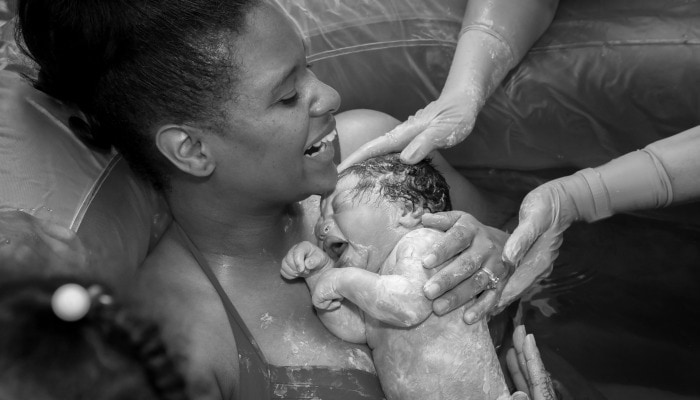
For whatever reason OBs don't seem to tell their patients how to have a less painful or shorter labor - they leave it up to them to figure it out. But we all want to have a shorter and less painful labor, right? Well, baby’s position has A LOT to do with how long and how painful birth can be!
As we all know, the best birthing position for baby to be in is head down - but that’s not all. Baby also needs to be facing mom’s back (anterior) with their chin tucked down. Baby best fits through the pelvis in this position making for an easier exit.
However, when baby is not in this ideal position mom's body will use contractions to reposition the baby instead of for dilation and descent. Once baby rotates things begin to move forward. This is one reason labor can take longer and therefore be more painful.
Now that we better understand optimal fetal positioning, doesn't it make sense to start working on this during pregnancy instead of waiting until labor?
Good news! Spinning Babies created a resource to encourage babies into more favorable birthing positions. I've used this resource and information so many times to help babies move to a better position prenatally or in labor, and subsequently had relatively fast and straight forward labors. Knowledge is power!

3. Epidurals Come at a Cost
The one thing I remember from my college economics class is that “there ain’t no such thing as a free lunch.” Basically, my professor was saying that there's a cost for everything - there’s always a catch.
This idea holds true for the epidural in labor. When getting an epidural there is a cost or a trade-off to that decision.
- There are side effects of an epidural to consider.
- Sometimes epidurals don't work, or only work partially on one side.
- Labor AND pushing may be longer with an epidural. (source)
- Parents are more likely to receive pitocin with an epidural. (source)
- The chance of having to use a vacuum or forceps to get baby out has increased. (source)
- Which then increases the chance of perineal tearing.
- With an epidural parents are confined to their bed, and cannot eat or drink.
- Being confined to a bed reduces normal maternal movement in labor, therefore lowering baby's opportunities to move to an optimal fetal position. This can make labors longer (see above).
I am not against epidurals! I am actually a big fan when used wisely and compassionately. I'm not a fan, however, when women aren't encouraged to weigh the benefits and risks to gain informed consent. This is so important!
Unfortunately, the current American medical model of care has not been created to fully support a woman in natural childbirth. Because of her high patient load and subsequent paperwork, sometimes all a nurse can do to help is offer drugs and epidurals. Parents preparing for a natural birth in the hospital should consider hiring a doula to avoid an epidural.
4. Lower the Risk of Cesarean
Unfortunately, OBs don't explain to parents how to lower their risk of a cesarean birth. I wish they would! Here are 5 ways to lower the risks of giving birth by cesarean, one of the big things your OBGYN won't tell you.
A. Consider a homebirth.
Yeah, I know this sounds so completely out of the box, but homebirth is a valid option to consider. I have personally witnessed some of the lowest cesarean rates in low risk, healthy women in a local homebirth practice. Believe it or not, research studies back me up on this.
There is something to be said about giving birth in your own home, not having to leave your home in the middle of labor (disrupting the flow of oxytocin), and having the extraordinary care from a competent and educated licensed midwife. The one-on-one care via a homebirth midwife is incomparable to even a hospital midwife. The time, the relationship developed, and the access to the midwife sets a mom up for success.
I understand if you need to have your baby in a hospital (I did!), but if homebirth is an option, consider it! The documentary The Business of Being Born is one of the best birth documentaries and will get you started.
B. Hire a doula.
A labor doula increases the chance of a vaginal birth (source) and reduces the need for extras like epidurals and vacuum assisted births. Doulas significantly lower the chance of having a cesarean birth. Amazing!
C. Avoid an Induction.
In a nut shell, an induction increases the risk of a cesarean birth. (source)
"One-quarter of those who had a labor induction ended up needing a C-section, versus 14 percent of those who had a natural labor."(source)
Familiarize yourself with common reasons for induction like low amniotic fluid and going past 40 weeks, beforehand, to have an answer when the induction conversation happens. And make sure to check out my posts about inducing naturally with things like castor oil and pineapple juice! 😉
D. Labor at Home
In my experience, the further along a woman is in the labor process, the harder it is to disrupt the flow of oxytocin, the hormone that causes contractions. If a woman shows up at the hospital 1-5 cm, her labor pattern is more vulnerable to influences like adrenaline, which can slow labor.
However, if a woman shows up at the hospital 6 cm and up (active labor), her labor pattern will often stay strong and resilient to disruptors like adrenaline. To lower your chance of a cesarean, try laboring at home as long as possible.
(But you know, make sure you get to the hospital and don't have a car baby too. I'm kinda over seeing birth videos all over the internets where women are unexpectedly having car babies. Car babies aren't fun! 😉 )
E. Plan a Natural Birth
Things like epidurals and pitocin increase the risk of cesarean. Therefore, planning for a natural birth will help decrease the risk of cesarean. This is where childbirth education and hiring a doula are mandatory. You cannot simply hope for a natural birth, you must plan for one.

I once heard an OB ask their patient if she had taken a childbirth class. Mama answered no, to which the OB said, “Oh, don’t worry, I’ll walk you through it.” Ummm....
Maybe the OB will walk her through the pushing stage, but they sure won't walk her through pain coping techniques, how to labor at home, how to lower your chances of surgery and other interventions, etc.
Women Have Been Giving Birth For Eons So...
Parents often think that since women have been giving birth for eons and eons they'll get through it just fine too, right? What's the big deal?
Here’s the thing - until recently (the past 100 ish years), women have not had to give birth in the medical system that modern women do. Women used to attend each other’s births and gain knowledge and wisdom from each other.
Since birth switched from home to hospital, women have lost the wisdom gained from one another. Birth became something unseen, which left the modern woman ignorant while navigating pregnancy, birth, and the medical model of care. What a mess.
Whatever you do, find a good childbirth class to plug into. A good way to find a class is to send an email to a few local doulas asking their opinions on classes. Doulas are the information keepers of birth communities. Or sometimes I call them the concierge of birth. 😉
5. Breastfeeding Preparation is a Must
Women have been breastfeeding their babies for eons and eons, so breastfeeding books and classes are a waste of time, right? Nope.
The same reason childbirth preparation is a must can be applied to why breastfeeding preparation is a must. For awhile in the 1900s breastfeeding almost went extinct (in America). Formula companies told doctors that their product was better than breast milk, formula was marketed to parents, and everybody believed the lie.
The result was the loss of breastfeeding knowledge passed down from generation to generation. Ideas like how to get a good latch, how to know if baby is getting enough, and how to increase milk supply -all lost. The profession of lactation consultant was born, and boy am I thankful. Contact a doula or a midwife to get a good referral if you end up needing some extra help.
Luckily, new moms today have more breastfeeding support than their mothers and grandmothers did, but we’re still not back to where we used to be. I highly recommend taking a prenatal breastfeeding class!
Online Breastfeeding Course
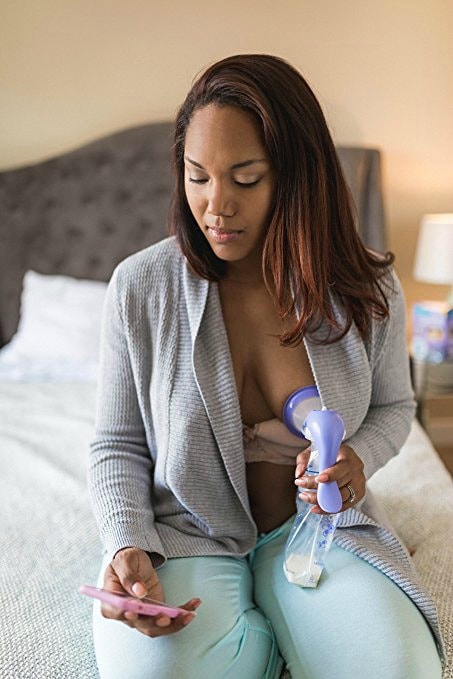
For visual learners the online course Simply Breastfeeding From Day One is PERFECT for new parents! I've personally taken this course and LOVE it! But, why learn about breastfeeding?
Breastfeeding is natural but it takes time to learn. New mothers say:
“I never imagined breastfeeding would be so hard and so time consuming.”
“They don’t really prepare you for how overwhelming breastfeeding can be.”
Parents who wait until their baby is born to learn about breastfeeding feel overwhelmed. The learning curve is steep, especially when also dealing with exhaustion from the birth and overrun with company. I’ve seen plenty of tears and heard families’ frustrations over not knowing how often to feed, whether their baby was getting enough milk, or how to avoid breastfeeding pain.
It doesn't have to be this way! ------>>>> CHECK IT OUT!
Things Your OB Won't Tell You: Do Your Own Research
The one thing I hope you gleaned from this article about things your obgyn won't tell you is that parents need to do their own research and advocate for themselves to achieve a better birth.
You are your advocate, and you will find nobody advocating for yourself like you would. Speak up and let your voice be heard! You got this!
NOTE: If after reading this article you're not sure if your care provider is the best fit, it may be time to fire your OB!
NOTE: This article was so popular, I made another! Head on over here to read 5 More Things Your OBGYN Won't Tell You (About How to Have a Better Birth and Postpartum)
There are definitely truths here. I certainly had a really bad experience doing natural birth in a hospital setting. Since then I learned that not all midwives are great either. Whether you do birth in a hospital, birth center or your home the biggest thing I think that's important is having a good relationship with your care provider. There are great OB's and really bad ones, their are great midwives and really not great ones. Trust your gut, do your research and make sure that YOU are comfortable with the dynamic and relationship that you have with yours 🙂 If I had trusted my gut and looked for a different OB I am positive I would have had a better experience as I learned later there are some great OB's in town that are more supportive of natural birth. I think if there is respect and support all the way through prenatal care and birth what the end outcome is has a much less negative effect on us and our psyche because we were respected, cared for, listened to and did what was needed for that particular situation (whether that's nothing or a lot of intervention).
Please first get your FACTS STRAIGHT, before scaring all pregnant women regarding epidurals and c/s. With and epidural YOU CAN DRINK clear fluids. With a c/s (which I HAD) you are up walking within 8hrs, and picking up your baby just fine. Your abdominal surgery 2 weeks postpartum is NOT the same as a C/S, so don't compare the 2. People can have wonderful natural childbirth with research, I agree, however not every baby or woman is fortunate enough to experience the 2, and don't make hospitals and medication the enemy. What would you do if you had a natural childbirth at home, and then your uterus decided not to contract, and you began to hemorrhage? Who is going to help you stop the bleeding? Who is going to save you from bleeding out? WHO.
This article is no way an attack on you or your choices. But I stand by what I wrote. And my midwife would stop a hemorrhage. She's really good at it.
Unless she carries blood and can pump it into you as fast as it's spilling out, you may well not survive a hemorrhage at home. Also, it amazes me how often home birth advocates fail to realize that hemorrhages can have causes that are not easily located and stiched. I nearly bled out alone on my bathroom floor after giving birth. I survived because of ER nurses who replaced most of the blood in my body, and an OB who did emergency surgery to locate the hidden source of the hemorrhage. It's so flippant to say, "Oh my midwife can fix a hemorrhage, she's really good at that." Those are the kind of comments I hear from people who have never lost consciousness in a puddle of their own blood. I wouldn't wish that experience on anyone, and I urge everyone to give birth where help is readily available if it happens.
Hey Jen. I really hear what you're saying... Oh my! Sounds like you went through a lot. I'm truly glad you're ok. Thank God for medicine and doctors. Whew. I just want to say, for all those who are reading this, that I literally watched my midwife stop hemorrhages happening to women while I was her birth assistant. She is a trained medical professional. She has a protocol she follows for excess postpartum bleeding. And when things need it, she can transfer to a hospital for more support. By saying that I am not discounting your experience, nor am I disagreeing with you that you needed medical support. I'm just trying to explain that yes, there are people who know how to handle postpartum hemorrhages out of the hospital.
My husbands cousin was bleeding extensively after her all natural home birth with a midwife. Her midwife was able to stitch her inside and applied essential oils to help the blood clot and heal. Midwives CAN do things like that just choose one who you think is experienced and perfect fit for you. On the other hand, I was planning to have a completely natural hospital birth because there are no midwives or doulas in our area for a home birth. I went in at 6 pm, labored overnight and started active labor at 9 the next morning. The only support I had was from my husband. The nurses were not able to focus solely on me (busy ward). I dilated to a 7 1/2 and asked for an epidural. After sitting up for the epidural, I realized too late that if I could get up and walk that I would be able to stand the pain. No one had offered me that option or reminded me that I was in control (I was extremely exhausted and almost delirious from pain and laboring lying down all night. Fell asleep as soon I had the epidural which gave me the strength to push when I was woken two hours later being told I had to have the baby immediately. Due to my baby's cord being extremely short, he was getting held up, unable to push through the canal. My OB decided to use a suction, which broke but helped get him out far enough for me to push him to the point where she could cut the cord. Some things could have been changed to make his birth easier if I had had the support of a midwife or doula there, but some things were inevitable! And next time I will be informed and am excited to see if things go better!
I am a Labor and Delivery nurse and I love this!! For my first baby (before i worked in L&D) I was induced at 39 weeks, had my water broken early, got an epidural (which caused a whole plethora of complications) and it ended in an emergency C-section. For my next baby, I educated myself, and I work in L&D now so I had more knowledge anyway. I was a primary VBAC, so I didn't have the option of a home birth, but I hired a doula and put together a great birth team. I work with and fully trusted my OB, and he and I spent the entire pregnancy planning my birth. I had an all natural hospital VBAC. It was a wonderful experience. Did it hurt? Yeah, but the pain was temporary and so worth it to me! I am actually looking forward to being pregnant and having another natural birth (in like 3 years lol). Thank you so much for writing this and sharing your wealth of knowledge with us! This gives so much good information!
As someone going through gestational diabetes in the third tri where I was told repeatedly by medical professionals this was out of my control and I did nothing to cause it, it's a bit heart breaking to read an article actually implying that I could have done something different and if I drank a smoothie every day I wouldn't be having to deal with the stress of this and added potential complications with my baby.... Yikes.
This article is not about you and it is not written to you. This article is written to women who were looking for ways to reduce pregnancy complications. (We should all want that for all women.) I hope all women can have healthy pregnancies and births by using evidence-based practices and decisions backed by research.
I am disappointed with this article. You have some pretty intense reasons to avoid having an epidural with zero statistics to back it up. Adjectives are not statistics.
I was 100% convinced I was going to birth my child all natural but I did my research about epidurals just in case. These risks you share are not as frequent as you are attempting to scare your readers into believing and tearing happens even in the most hippy of births. That's part of giving birth.
When I found out how big my child was being being estimated, I begged to be induced and made sure I got an epidural before I was too far gone. I labored actively for three hours after my water broke with NO dialating. I asked for my epidural and went from 3cm to full dialation in an hour.
Also, who wants to eat when they are in active labor? I would have killed anyone who suggested the idea!
I'm happy you had a great birth. I stand by what I wrote. Thanks for stopping by.
As a medical professional, I firmly believe that you should do your research and learn about all aspects of a planned procedure (such as birth), regardless your trust in your doctor. While I don't agree with all points made in this article, I do like that it provokes alternative thinking and brings up important points. I especially like that it brings up some of the risks associated with an epidural - a procedure that has become so commonplace that it is almost assumed to be a standard part of birth. It may very may well be an important tool for many women, but it is important to realize that no medical intervention comes without risks. And every procedure should be considered by a careful consumer (in this case the pregnant woman) through a personal risk/benefit analysis. I, personally, decided that I did not want to deal with the epidural. I had a super easy (still painful, but short and uncomplicated) natural birth in the hospital with a midwife group. Personally, I would never deliver (intentionally) outside of a hospital, I *personally*think it's too much of a risk should something go wrong that required interventions only available at a hospital. However, in my birth experience, the intervention of having an epidural would have introduced unnecessary risks, so I didn't get it (it wasn't a simple matter of fact thing though - I spent months researching alternative pain control, I specifically used a midwife group with similar ideologies, I did the bulk of my labor at home, and I'd been bouncing on a birth ball for weeks to get the baby in a good position). Now, I was in labor for 4 hours, my sister had a baby a few months before me and she (also went into labor not wanting an epidural) was in labor for 20+ hours. There came a point where she took the epidural, and it was a completely appropriate intervention for her - the benefit outweighed the risks. But I think it's important to be able to have a frank discussion about those risks so that other women can go into birth better prepared.
Birth was hard (and I had an easy birth but it was still really, really hard) and impossible to plan, but you should still try to plan and prepare and educate yourself as much as possible. You should recognize that you must be your own advocate, and that in order for your doc to best treat you (and I firmly believe that most docs are good docs and want what's best for their patients), you should be prepared, educated, assertive, and honest about your priorities in giving birth. If your priority is having a natural birth, but you don't express that to the doc, they may prioritize pain control (hospitals are rated and in a large part paid on satisfaction and pain control is a huge part of that). In fairness to yourself, your baby, and your practitioner, you should come to your own conclusions about birth and communicate your expectations to your doc so that when shit hits the fan, the doctor can (within reason) support your plans. Although not everything can be controlled, and some women will be dealt a crap hand in pregnancy, labor, and delivery, and through no fault of their own require interventions to bring their beautiful baby into the world. And in those cases there is nothing more valuable than a good doctor who you trust to make snap decisions for you.
And also def find yourself a lactation consultant before birth if you plan to breastfeed. It is hard work and for me it was frustrating, nerve wracking (is my baby even getting anything??), and very painful at first. However, it was a priority of mine to at least give it my best shot, and we succeeded (after a lot of hard work, tears, and an excellent lactation consultant), but I don't know that I would have if I hadn't paved the way prior to giving birth.
Thanks for this AMAZING comment! I really appreciate it. Some really good advice here. ♥
I am in healthcare, and I am also a mother of a two year old. I tend to think we need to have moderation in our approach to these attitudes about what is right and wrong as far as L&D goes. I am a nurse, and nurses are TRAINED to look at the *whole* patient: spirit, soul, and body. We are TRAINED to pursue non- pharmacological treatments when our patients are having pain, anxiety, etc. When I was pregnant, I followed all of the recommendations about eating healthy, weight gain, exercise, and keeping stress to a minimum. I even had a doula who was an RN herself and we had a birth plan all nailed down. Mine was not initially a high risk pregnancy. At 12 weeks, I had some spotting and I was told I had a "low lying placenta", not enough to be considered placenta previa, but my OB told me to "take it easy". The rest of my pregnancy was absolutely normal and fine. I went for my 40 week appointment and it was discovered I had no amniotic fluid. I had previously had no frank loss of waters, neither did I notice loss of the mucus plug. I was sent straight to the hospital for induction. Needless to say, I wasn't progressing hardly at all with cervidil, so they ended up hanging Pitocin. Baby girl's heart wasn't having it, so I ended up with an emergency c-section, the whole gambit. I did everything "right" and still had this outcome. Friends I have that are more on the hipster/hippy end of the spectrum, didn't ask me how I was or if they could do anything when we told them the story of my delivery process, they said, "oh you had a c-section? I'm so sorry." Like I was less a mother than anyone else, or like I'm less of a woman. These articles do contribute to people acquiring that chip on their shoulders and they pass judgment on those of us who literally.tried.everything. to have a natural birth and bring guilt. Guess what? I will have a repeat c-section when I have my next child, and I won't feel one bit guilty about it because it is my choice and a well-informed choice. What we truly need is information, educated decisions, and everyone to keep their opinions to themselves until they have walked in the shoes of the one whom they are enforcing it upon. Try a little compassion and empathy. If you want to have your baby at home and take the risk, go for it. Women have done it for centuries. Of course infant mortality was higher then, but it's not impossible, and I applaud you for your bravery. It can be successfully done. I will admit I'm not that brave. I've seen the bad stuff go down in the ICU firsthand, so that is why I'm making my decision. To each her own.
Hey Tiffany, thanks for commenting. I feel like this blog post is just a small slice of what I write about and it's not exactly fair to say that I'm passing judgement on women who have more medical births. Just like in my childbirth classes - each week we talk about something different and in the end it all ties together. I feel like if you read my whole blog (haha yeah I know that's not possible) you would have such a bigger picture and better idea of my heart. Since that's not possible, would you do me a favor and read this post? https://www.motherrisingbirth.com/2016/01/problemswithbirthaffirmations.html Of all people it's not going to be me judging women for having varied birth experiences. Birth is HARD. Birth is UNKNOWN. Birth cannot be planned! I think you're awesome for rocking a cesarean birth - that takes a lot of courage too - just like a vaginal birth. Please understand that when I am writing blog posts educating women about natural birth, that I don't believe that is the only way they should birth. But I have to start somewhere, you know?
Great article! I would also recommend Hypnobabies as a great childbirth class. I had to have an induction due to pre-eclampsia and Hypnobabies got me through without an epidural.
Next time I want to have a homebirth. I had my first baby in a hospital with certified nurse midwives. The midwives were great, but the hospital setting was not. The nurse that you're working with can have a HUGE effect on your experience--and you don't get to pick your nurse! The first day of my labor I had a nurse that was a TERRIBLE fit for me. We eventually "fired" her, and the second day I got a nurse that was wonderful. I really wish I could've skipped that first day, though.
If I have to be in the hospital again, I will for sure get a doula. I need someone to be responsible for immediately firing any nurse that isn't a good fit for me, and my husband just wasn't up for that task. (And I was a little distracted, so don't think that should be my job! :))
Thanks, Meghan! YES, your birth team makes a world of a difference! Happy to hear you stuck up for yourself and got a nurse that was a better fit. Doulas ARE amazing. 😉
I have no idea where you came up with the notion that IUGR is common or that it can be prevented by consuming probiotics or a smoothie, but it's offensive to the families who have had to deal with it. Obviously being as healthy as possible should be the goal of every pregnant woman. But to say your top three issues can be avoided purely with diet is ridiculous.
Hey G. Thanks for commenting. Please read this blog post here https://www.motherrisingbirth.com/2016/03/probiotics-during-pregnancy.html (which is linked above) and then check my sources. I didn't make this information up. There IS a link with IUGR and probiotics/diet. I'm not trying to be offensive. Sorry if I was, or if it was hard to get the whole picture of what I was saying. But I would love it if you could read that first and come back and talk to me.
Hahahahahahahaha this article is hilarious and completely off base. Drinking a smoothie to help reduce risk of IUGR or gestational diabetes? Laughable. What scientific resources did you use? Which randomized controlled trials? Please don't spread false knowledge. You are endangering people. And I can tell you first hand that doctors DO help you to stay healthy and low risk - what about that is something an OB/GYN doesn't tell you??
It's actually not that funny. Read my links and check my sources before leaving comments like these.
This will get you started: http://www.tandfonline.com/doi/abs/10.3109/14767058.2012.755166
Posting that preeclampsia is avoidable is so very frustrating to anyone who's been there. In my experience, preeclampsia hit out of no where, and wasn't at all influenced by my diet or exercise routines. I was extremely cautious and active during my first pregnancy and ended up being admitted to the hospital and had an emergency c-section. Our child passed shortly there after. To cite one source that says milk base probiotics were linked to decreased risk and would have prevented this is insulting to anyone who's been there and lived through the "what ifs" afterwards.
In a different article you state, "WebMD goes on to say that nobody knows the cause of preeclampsia. But, in my opinion, they are incorrect. I think we have a VERY good idea of the cause we know a way to decrease the chances of a women." Just so we're clear, an entire medical community, based in years upon years of medical research can't determine the causes or exact ways to prevent a very serious medical condition, but YOU have read some books, coached women through births, had a few kids of your own and can now disperse your opinions freely as if they will save thousands of lives?
My OB's (and I realize not everyone is as lucky) saved my life and made it possible for me to have a happy, healthy pregnancy afterwards. Please be more cautious when stating, "Did you know that these three pregnancy complications do not necessarily happen by chance? There are simple things you can do to decrease your risk." And "For example, by simply eating probiotic rich food or taking a probiotic daily, you can reduce the chance of ALL the pregnancy complications listed above."
SIMPLY EATING PROBIOTIC RICH FOODS?!?
Anyone who's been there hears, 'your child could have lived if you'd just eaten more probiotics'.....funny because top medical doctors have said this was completely unavoidable.
Be more cautious when touting your research as end all be alls to serious medical conditions.
Hey Alysia. I am SO SORRY for your loss. What a tragedy. I am so, so sorry. There's nothing worse, I'm sure, than losing a child. My heart goes out to you. I'm sorry that this article offended you and brought back unhappy memories and made you feel as if you were to blame. That was never my intention. Please know that. My intention in this article to to share the information in the research I have found, which says that eating milk based probiotics during pregnancy decreases the risk of developing preeclampsia and severe preeclampsia. ♥
All I can say is i wish i read this before my first child... and you are so right about epidurals and VBAC. I have experienced a C-section and a VBAC. it was so fulfilling to leave the hospital after a day with no complications when i had the VBAC.My earlier experience started from an induction and it led to an emergency CS.
well.. thanks for writing this.
You're welcome! And be kind to yourself. We all are doing the best we can every day. ♥
The only thing I can think of to comment is "YES to all of this!!!!" 🙂
Wooohooo!
I did not read all the comments so this may have already been addressed.
I think your #4 should be addressed and noted as "in your experience, at your birth place". I had a vaginal birth, no epidural, and no doula. If I'd read this earlier in my first pregnancy it would have terrified me.
My hospital nurses never pushed an epidural or any other drugs on me, it was always my call. In active labor my dr came by several times and I had a nurse with me through so much of the "hard stuff". I had a team, my dr, my husband, and two nurses helped me through pushing.
I know we are all different with different situations but don't slight hospital care - it's not all bad. People should do their research with moms who've delivered with their dr, and moms who've delivered at their chosen birth place.
Baby 2 on the way and I don't plan to change a thing.
I had an amazing epidural. It took the pain away and allowed me to enjoy the process of labor. With concentration I was also still able to feel when I was having a contraction to know when to push. Yes, I tore, but EVERYONE tears. It's not a big deal. The body heals. It was expected. I had an amazing experience and people that say these things I feel like don't REALLY know what they're talking about.
You say, "everything comes at a cost". Well so does a home-birth. They can be extremely risky. Two friends of mine (one of them a super 'al-natural' kind of girl whose momma had 6 babies at home) planned theirs at home, everything was going well for both until suddenly the midwife finds that something is very very wrong. For one of them the cord was wrapped around the neck. She had to hold the baby in during the entire ambulance ride. Both girls had to have emergency c-sections.
No labor, no plan, is perfect. They are all risky. And the fear of having a c-section btw seems to be so silly. Who cares if someone has a c-section? The object is to get the baby out keeping baby and mommy safe. I clicked on this link hoping I would find tricks of the trade for my next one. But instead I read just another post from someone telling me I'm doing it wrong. We should be supporting each other, not making one another question their decisions and feel like they are making the wrong choice. That's not right. A friend wants a home-birth, then cool! A friend wants a scheduled c-section, then cool!
I'm glad you had a great birth. You're a great mom!