5 Things Your OBGYN Won’t Tell You - How to Have A Better Birth
Over the years I've realized there are things your OBGYN won't tell you about how to have a better birth and postpartum - 5 things in particular.
For my first pregnancy I used an out of hospital midwife and had my baby at a birth center. Because my pregnancies became a tiny bit higher risk after that, my prenatal care switched to an OB but then eventually ended with a midwife again. I'm also a doula and childbirth educator and what that means is... I just know too much. I know too much about what prenatal and postpartum care could be. 😉
With an OB my prenatal visits were short and rushed. Honestly, I spent more time waiting for the appointment than in my actual appointment. Even though the staff was very friendly and helpful, I felt like just a number. My experience left much to be desired.
Here are the 5 things I found that your OBGYN won't tell you about how to have a better birth and postpartum. PLEASE use this information so that you can have a strong birth and healthy postpartum!

1. Stay Healthy and Low Risk
One of the most powerful things a woman can do to help have a better birth and postpartum is to be healthy and stay low risk throughout her pregnancy. Some complications are out of our control, but some are not.
Gestational diabetes, preeclampsia, and intrauterine growth restriction (IUGR), for example, are three common pregnancy complications that can turn a healthy pregnancy into a more complicated fiasco, all increasing the chance of cesarean, induction, and sick babies (which obviously make for a more difficult birth and postpartum).
Did you know that these three pregnancy complications do not necessarily happen by chance? There are simple things you can do to decrease your risk.
For example, by eating probiotic rich food or taking a probiotic daily, you can reduce the chance of ALL the pregnancy complications listed above. I think that's pretty cool! (PLEASE click through the link above, read it, and check my sources before commenting below.)
I'm not saying that everyone can magically have low risk pregnancies always. I am saying that there are sometimes things we can do to lower risk during pregnancy. If this sounds like something you'd be interested in, check out my natural pregnancy resource list. It's free!
2. A Less Painful and Shorter Labor is Possible
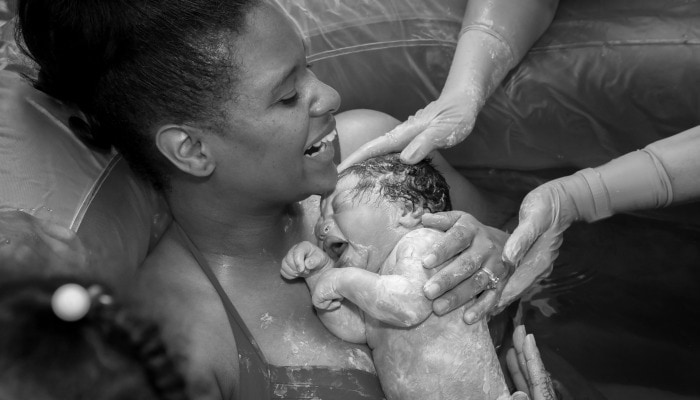
For whatever reason OBs don't seem to tell their patients how to have a less painful or shorter labor - they leave it up to them to figure it out. But we all want to have a shorter and less painful labor, right? Well, baby’s position has A LOT to do with how long and how painful birth can be!
As we all know, the best birthing position for baby to be in is head down - but that’s not all. Baby also needs to be facing mom’s back (anterior) with their chin tucked down. Baby best fits through the pelvis in this position making for an easier exit.
However, when baby is not in this ideal position mom's body will use contractions to reposition the baby instead of for dilation and descent. Once baby rotates things begin to move forward. This is one reason labor can take longer and therefore be more painful.
Now that we better understand optimal fetal positioning, doesn't it make sense to start working on this during pregnancy instead of waiting until labor?
Good news! Spinning Babies created a resource to encourage babies into more favorable birthing positions. I've used this resource and information so many times to help babies move to a better position prenatally or in labor, and subsequently had relatively fast and straight forward labors. Knowledge is power!

3. Epidurals Come at a Cost
The one thing I remember from my college economics class is that “there ain’t no such thing as a free lunch.” Basically, my professor was saying that there's a cost for everything - there’s always a catch.
This idea holds true for the epidural in labor. When getting an epidural there is a cost or a trade-off to that decision.
- There are side effects of an epidural to consider.
- Sometimes epidurals don't work, or only work partially on one side.
- Labor AND pushing may be longer with an epidural. (source)
- Parents are more likely to receive pitocin with an epidural. (source)
- The chance of having to use a vacuum or forceps to get baby out has increased. (source)
- Which then increases the chance of perineal tearing.
- With an epidural parents are confined to their bed, and cannot eat or drink.
- Being confined to a bed reduces normal maternal movement in labor, therefore lowering baby's opportunities to move to an optimal fetal position. This can make labors longer (see above).
I am not against epidurals! I am actually a big fan when used wisely and compassionately. I'm not a fan, however, when women aren't encouraged to weigh the benefits and risks to gain informed consent. This is so important!
Unfortunately, the current American medical model of care has not been created to fully support a woman in natural childbirth. Because of her high patient load and subsequent paperwork, sometimes all a nurse can do to help is offer drugs and epidurals. Parents preparing for a natural birth in the hospital should consider hiring a doula to avoid an epidural.
4. Lower the Risk of Cesarean
Unfortunately, OBs don't explain to parents how to lower their risk of a cesarean birth. I wish they would! Here are 5 ways to lower the risks of giving birth by cesarean, one of the big things your OBGYN won't tell you.
A. Consider a homebirth.
Yeah, I know this sounds so completely out of the box, but homebirth is a valid option to consider. I have personally witnessed some of the lowest cesarean rates in low risk, healthy women in a local homebirth practice. Believe it or not, research studies back me up on this.
There is something to be said about giving birth in your own home, not having to leave your home in the middle of labor (disrupting the flow of oxytocin), and having the extraordinary care from a competent and educated licensed midwife. The one-on-one care via a homebirth midwife is incomparable to even a hospital midwife. The time, the relationship developed, and the access to the midwife sets a mom up for success.
I understand if you need to have your baby in a hospital (I did!), but if homebirth is an option, consider it! The documentary The Business of Being Born is one of the best birth documentaries and will get you started.
B. Hire a doula.
A labor doula increases the chance of a vaginal birth (source) and reduces the need for extras like epidurals and vacuum assisted births. Doulas significantly lower the chance of having a cesarean birth. Amazing!
C. Avoid an Induction.
In a nut shell, an induction increases the risk of a cesarean birth. (source)
"One-quarter of those who had a labor induction ended up needing a C-section, versus 14 percent of those who had a natural labor."(source)
Familiarize yourself with common reasons for induction like low amniotic fluid and going past 40 weeks, beforehand, to have an answer when the induction conversation happens. And make sure to check out my posts about inducing naturally with things like castor oil and pineapple juice! 😉
D. Labor at Home
In my experience, the further along a woman is in the labor process, the harder it is to disrupt the flow of oxytocin, the hormone that causes contractions. If a woman shows up at the hospital 1-5 cm, her labor pattern is more vulnerable to influences like adrenaline, which can slow labor.
However, if a woman shows up at the hospital 6 cm and up (active labor), her labor pattern will often stay strong and resilient to disruptors like adrenaline. To lower your chance of a cesarean, try laboring at home as long as possible.
(But you know, make sure you get to the hospital and don't have a car baby too. I'm kinda over seeing birth videos all over the internets where women are unexpectedly having car babies. Car babies aren't fun! 😉 )
E. Plan a Natural Birth
Things like epidurals and pitocin increase the risk of cesarean. Therefore, planning for a natural birth will help decrease the risk of cesarean. This is where childbirth education and hiring a doula are mandatory. You cannot simply hope for a natural birth, you must plan for one.

I once heard an OB ask their patient if she had taken a childbirth class. Mama answered no, to which the OB said, “Oh, don’t worry, I’ll walk you through it.” Ummm....
Maybe the OB will walk her through the pushing stage, but they sure won't walk her through pain coping techniques, how to labor at home, how to lower your chances of surgery and other interventions, etc.
Women Have Been Giving Birth For Eons So...
Parents often think that since women have been giving birth for eons and eons they'll get through it just fine too, right? What's the big deal?
Here’s the thing - until recently (the past 100 ish years), women have not had to give birth in the medical system that modern women do. Women used to attend each other’s births and gain knowledge and wisdom from each other.
Since birth switched from home to hospital, women have lost the wisdom gained from one another. Birth became something unseen, which left the modern woman ignorant while navigating pregnancy, birth, and the medical model of care. What a mess.
Whatever you do, find a good childbirth class to plug into. A good way to find a class is to send an email to a few local doulas asking their opinions on classes. Doulas are the information keepers of birth communities. Or sometimes I call them the concierge of birth. 😉
5. Breastfeeding Preparation is a Must
Women have been breastfeeding their babies for eons and eons, so breastfeeding books and classes are a waste of time, right? Nope.
The same reason childbirth preparation is a must can be applied to why breastfeeding preparation is a must. For awhile in the 1900s breastfeeding almost went extinct (in America). Formula companies told doctors that their product was better than breast milk, formula was marketed to parents, and everybody believed the lie.
The result was the loss of breastfeeding knowledge passed down from generation to generation. Ideas like how to get a good latch, how to know if baby is getting enough, and how to increase milk supply -all lost. The profession of lactation consultant was born, and boy am I thankful. Contact a doula or a midwife to get a good referral if you end up needing some extra help.
Luckily, new moms today have more breastfeeding support than their mothers and grandmothers did, but we’re still not back to where we used to be. I highly recommend taking a prenatal breastfeeding class!
Online Breastfeeding Course
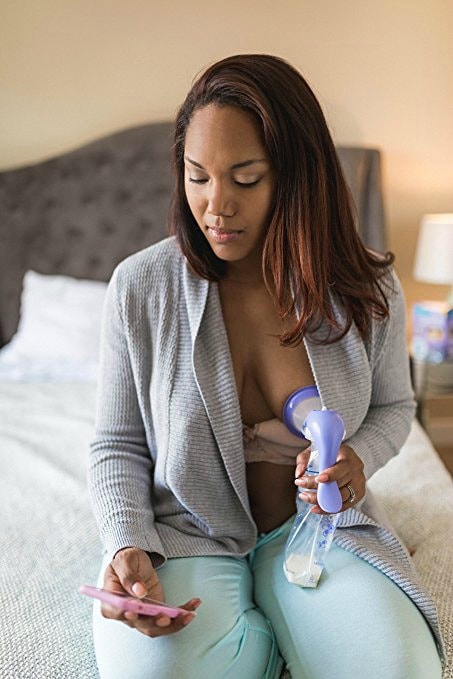
For visual learners the online course Simply Breastfeeding From Day One is PERFECT for new parents! I've personally taken this course and LOVE it! But, why learn about breastfeeding?
Breastfeeding is natural but it takes time to learn. New mothers say:
“I never imagined breastfeeding would be so hard and so time consuming.”
“They don’t really prepare you for how overwhelming breastfeeding can be.”
Parents who wait until their baby is born to learn about breastfeeding feel overwhelmed. The learning curve is steep, especially when also dealing with exhaustion from the birth and overrun with company. I’ve seen plenty of tears and heard families’ frustrations over not knowing how often to feed, whether their baby was getting enough milk, or how to avoid breastfeeding pain.
It doesn't have to be this way! ------>>>> CHECK IT OUT!
Things Your OB Won't Tell You: Do Your Own Research
The one thing I hope you gleaned from this article about things your obgyn won't tell you is that parents need to do their own research and advocate for themselves to achieve a better birth.
You are your advocate, and you will find nobody advocating for yourself like you would. Speak up and let your voice be heard! You got this!
NOTE: If after reading this article you're not sure if your care provider is the best fit, it may be time to fire your OB!
NOTE: This article was so popular, I made another! Head on over here to read 5 More Things Your OBGYN Won't Tell You (About How to Have a Better Birth and Postpartum)
A briefing on my experiences.
With my first two babies I was lied to by doctors, anesthesiologists, and a uncaring licensed midwife. Both ended in unnecessary c-secs.
I chose to go with a traditional midwife and had my 11.2 lb (largest baby)was delivered at home and it was a wonderful experience!
She educated me on my health, baby's heath (our diets) and positioning for a good outcome. Even with a bad tear, recovery was amazing! I was on a cloud and riding my horses in just afew weeks where the surgeries left me an invalid for over a year at a time.
Final note, glory be to God!
I'm glad you had a great birth! You're a great mom.
This article is such a load of shit. You should be ashamed of yourself.
This was a great post! I have had both a Csection with an OB practice and a completely unmedicated VBAC with a midwife and doula. I know absolutely that your birth experience is directly related to the provider you choose. It's all a trickle down effect from there.
My midwife actually remembered who I was at appointments, she hugged me, cared for me, held my baby, and even switched shifts to come be with me during my delivery at the hospital (till midnight!) after a full day of working at the clinic.
That's not to say all OBs are evil, but I absolutely experienced the factory version of birthing my first time around and didn't realize how personal and sweet it could be until I had that bad experience which made me do a 180 in my choice of care.
Birth should be beautiful and intimate, and if you don't feel your provider can make that a reality- find a new one!
I know a couple who had an at home birth with a doula and their baby ended up having undetected congenital heart issues that caused the baby to die within a day or two. This could have been prevented had they delivered at a hospital. There really was no way for the doula to detect that anything was wrong at the time. They are now divorced.
I do not believe that this is the norm, however it is enough to scare me away from a home birth even though I also know of many more successful home births. I agree with many others that it really depends on your labor and delivery experience and medical/pregnancy history, but for me personally I feel that a hospital birth minimizes risks just a little more than a home birth.
What a sad, sad story. I'm so sorry for your friend.
1) Doulas are not medical professionals. No doula should be in the business of detecting congenital heart defects. Were you thinking of a midwife?
2) There is a simple screening for congenital heart defects that is now standard protocol for in and out of hospital births (where I live). This simple check via a oxygen pulse oximeter was not part of the standard protocol until recently. So, in or out of hospital, the babies where I live are receiving this screening. Yay!
I just wanted to respond to this for all the women who end up getting gestational diabetes, through no fault of their own: this woman has no idea what she's talking about. Gestational diabetes is caused by the placenta, it's not caused by anything you have done. This is my first pregnancy, and I came down with GD, and I was on copious amounts of probiotics because I have IBS, GERD, and chronic gastritis. I am of normal weight, and I eat a healthy diet. The ONLY reason why I came down with this problem is because I have a placenta that wants the baby to get more sugar than she needs. There's no way I could have prevented this.
Also, don't let this woman talk you into not listening to your OB about how you should handle your pregnancy if you have GD! Despite having a mild case, and keeping my sugars strictly in check, my baby measured 7.5 lbs at 36 weeks! My doctor and I decided to induce at 39 weeks, because every day thereafter increases the risk of still birth in babies with GD! As it is, she is currently 9.5 lbs, and have one week left. My OB does not want me to have a cesarean, but because my daughter is very large (her abdomen measures in the 100th percentile), it's in everyone's best interest to be near a hospital if she gets stuck!
You can eat and drink with an epidural and don't let anyone tell you otherwise!!! The nurse at the hospital told me "let me know when you're finished with your lunch so we can get started. You can't eat once the IV is in." I promptly told her that my midwife allows eating during labor and delivery and she went and checked with her. She came back a few minutes later and said, "okay you can have LIGHT SNACKS and water." A lot of well-meaning health professionals just go by tradition and policy and need gentle reminders that the evidence points in favor of eating and drinking throughout labor as you wish, even with an epidural!
As someone who has GD, I am irked by your suggestion that you can avoid it by staying healthy. Many of us get GD and are perfectly healthy with a normal weight and a good diet. Just bad luck or different genes. Also the complications come with poorly controlled diabetes. I wish the author would have done her research.
Hello, I read this article and wish I hadn't. Can I can have my 10min back?
Avoiding high risk is easy! Yep. Just don't be 35+ or have diabetes run in your family. Also, shame on you if hiring a doula ($100+ an hour!) is out of your price range! God forbid you trust the nurses who spent years going to school (and are now saddled with student debt) and who deliver babies all day long. Yeah! What do they know?!? Lol
Normally I would just pass this article by and file it under 'ugh.' But I felt the need to comment because I know there are other women like me who felt shamed while reading this.
In a perfect world, where we are all of 'appropriate maternal age' with plenty of extra cash for doulas and home births - not to mention perfect family medical history records- this article would be spot on.
To those of us who fall outside of that frame - guess what?! It'll be ok! Nurses at the hospital DO KNOW what they're doing! The choice to have an epidural is YOURS! And for all the other things you don't know - there's always the internet - I guess.
Mommy over 35.
I was fit active and healthy before and during pregnancy and I still had gestational diabetes. You cannot prevent it. This article is crap
I agree with you. I worked and walked regularly though out my pregnancy, had morning sickness so bad that I went from 230 pounds to 165 pounds after birth. I never took a single class on natural birth yet I had one. Its all about mindset. You have to ready your mind to get your body ready for what it's about to go through. Not every one but some people are just naturals.
While there are some valid points brought up in this piece, it’s just pure folly to discredit modern medicine in this way. I know that most of us can rationally disseminate what to take from such a piece, but there are those who would take this and add it as gospel to their anti-doctor arsenal. What many fail to acknowledge is the differences in infant and maternal mortality rates between now and years ago when birth was primarily without assistance. For me personally, the chance of losing even one precious baby of mine because I opted to birth away from lifesaving equipment and professionals is just not within the realm of risks I will take in life. Why would my need of the “perfect” birth trump the potential safety of my child?
This article has made me feel so blessed - my OB/GYN team were extremely informative about all of my options, natural birthing, etc. I would choose absolutely to have any further children in a hospital because my daughter had a congenital defect and required a higher level of care that she was able to receive down the hall from me, but I support all birth/feeding options. Just make sure that whatever person you work with, be it a midwife, doula, doctor, nurse, or your anesthesiologist, that they are aware of your wishes and willing to work with you.
The statement of "if you want a natural hospital birth and avoid epidural, you MUST hire a doula" is false. I did so with my second birth: arom induction 40+9, 4 hours of labor. Bring your birth ball and a support person who knows what you want. I wasn't sure I could, but I DID! 🙂
I am a practising anaesthetist and I’m afraid your ‘facts’ on epidural risks are dangerously misleading and incorrect.
Current evidence shows that:
epidurals do NOT increase the chance of caesarian section, nor of foetal distress.
They also do NOT increase the incidence of long term lower back pain compared to pregnancy/labour alone (a widely held misconception worth sharing).
They slightly increase the risk of an assisted delivery.
1 in 10 will not work perfectly on first go- but you will always be offered a re-site, which has a 90% chance of working perfectly.
There is a 1 in 100 risk of a bad headache after insertion if the epidural is inserted slightly too far, which can be treated.
Serious risks such as permanent nerve injury are extremely rare, around 1 in 250,000.
Mis-information for expectant mothers is both fear inducing in a time of already great anxiety and a failure of responsibility and I implore you to update your article.
Furthermore, you absolutely CAN drink whilst you have an epidural. In addition you will be given intravenous fluids to ensure you stay well hydrated, a vital basic requirement of care of labouring women. To suggest that a woman will be left to languish without is deeply misleading.
I would NEVER EVER EVER recommend having a home birth!!!!!!! I had a healthy pregnancy with my son and a healthy labor everything was simple and as one might call “textbook”. When my water broke they found that there was meconium in the sack. Upon my sons entry to the world, he breathed that in and was not breathing air upon entry. This was unavoidable and we thought everything would have been normal. My son was blue! He was intubated immediately and raced to another hospitals NICU. He recovered just fine and is a perfectly healthy toddler. If I would have a home birth or not been in the hospital my son would have died from a completely curable thing. If you want to go 100% natural, ok I can respect that. But please choose to deliver in a hospital!!!
While I totally respect your story and opinions, it really has nothing to do with the article. This article is focused on finding a quality care provider, paying attention to those internal nudges that something's not right, etc. No matter where a woman has a baby, these skills in finding a highly skilled, knowledgable, compassionate, etc. care provider is critical.